Mulhouse, France
- 111,430 people
- 18 places to visit
- 47.7508, 7.3359
Places to Visit (18)
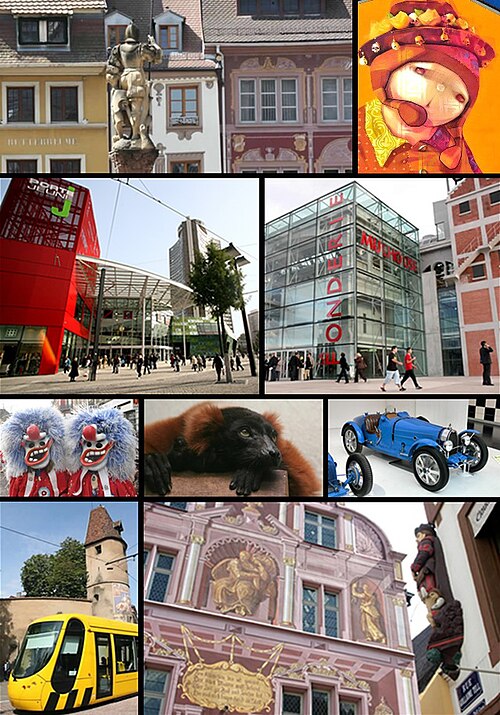
Mulhouse is a city located in the Alsace region of northeastern France, near the borders with Germany and Switzerland. With a population of approximately 110,000 residents, it is the second-largest city in the Alsace region, after Strasbourg. Historically, Mulhouse emerged as a significant industrial center in the 19th century, particularly known for its textile manufacturing and later, automobile production. The city played a pivotal role in the industrial revolution in France and has maintained its economic relevance through various sectors, including engineering, services, and research.
The city is characterized by its rich cultural heritage, blending French and Germanic influences, which is evident in its architecture, cuisine, and festivals. Mulhouse features a diverse array of buildings, from medieval structures like the Tempel Saint-Étienne, a stunning Protestant church, to Art Nouveau homes reflecting the city's industrial wealth during the 19th century. The Mulhouse Museum of Fine Arts and the Cité de l’Automobile, one of the largest automobile museums in the world, attract numerous visitors and showcase the city’s unique history and contributions to art and technology. Additionally, the annual Festival Mulhouse Jazz is a celebration of music that draws artists and enthusiasts from across the region.
In terms of transportation, Mulhouse is well-connected, offering comprehensive rail and road networks that facilitate easy travel to nearby cities in France, Germany, and Switzerland. The Mulhouse tram system enhances urban mobility, promoting the use of public transport. The city's strategic location, combined with its industrial legacy and cultural vibrancy, makes it an important urban hub in the Alsace region, contributing to its economic and cultural dynamism. Overall, Mulhouse is a city that embodies a blend of historical significance, modern innovation, and multiculturalism, making it a distinctive destination within France.
Facts about Mulhouse
- Mulhouse is known as the 'City of Cars' due to its automotive history, prominently featuring the Cite de l'Automobile, the largest automobile museum in the world.
- The city was historically a significant center for the textile industry, earning it the nickname 'The Textile Capital of the World' in the 19th century.
- Mulhouse was the birthplace of the famous French painter and graphic artist, Frédéric Auguste Bartholdi, who designed the Statue of Liberty.
- It is the only city in France to have a direct train service to Germany, making it a key transit point between the two countries.
- Mulhouse hosts the annual 'Mulhouse zum Weihnachtsmarkt', a Christmas market that combines French and German traditions, reflecting its cultural blend.
- The city is home to the Mulhouse Zoological and Botanical Park, featuring over 1,000 animals and a variety of botanical collections, making it one of the largest zoos in France.
- Mulhouse has a rich railway history, with the first railway in continental Europe established in the city in 1840, known as the Mulhouse-Colemar line.
- The architectural style of Mulhouse is distinctive, showcasing a mix of Alsatian and Art Nouveau influences, particularly in its historic downtown area.
- Mulhouse is part of the Alsace region, which has a unique blend of French and German culture, evident in its cuisine, festivals, and language.
- The city played a crucial role in the establishment of the 'European Greater Region', promoting cross-border cooperation and development between France, Germany, Luxembourg, and Belgium.