Multan, Pakistan
- 1,437,230 people
- 14 places to visit
- 30.1864, 71.4886
Places to Visit (14)
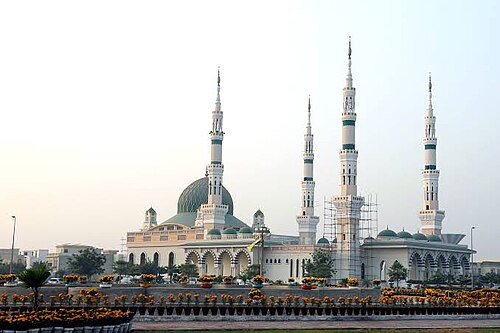
Multan, often referred to as the "City of Saints," is a historic city located in the Punjab province of Pakistan. It is one of the oldest cities in the region, with a history that dates back over 5,000 years. Multan is situated at the crossroads of important trade routes, which has contributed to its significance as a cultural and economic hub throughout history. The city is known for its rich Islamic heritage, having been an important center for Sufism, and it is home to numerous shrines and mausoleums of revered saints, including the famous Bahauddin Zakariya and Shah Rukn-e-Alam, which attract thousands of pilgrims and tourists each year.
The urban landscape of Multan features a blend of ancient architecture and modern development. The city is renowned for its unique brickwork, traditional crafts, and vibrant pottery. Visitors can explore the centuries-old streets, bustling bazaars, and various historical sites that showcase the city's architectural beauty, such as the Multan Fort and the grand Mosque of Shah Rukn-e-Alam. Multan's economy is primarily based on agriculture, with the fertile lands surrounding the city contributing to the cultivation of crops like cotton, wheat, and sugarcane. Additionally, Multan has a growing industrial sector, with textile and manufacturing industries playing a crucial role in the local economy.
Multan's climate is characterized by hot summers and mild winters, and the city experiences a semi-arid climate with limited rainfall. The population of Multan is diverse, with a mix of various ethnic groups and languages, although Punjabi predominates. The city is also a center for education, hosting several well-regarded institutions and universities. Multan remains an important city in Pakistan’s socio-economic landscape, combining its historical significance with contemporary growth and development.
Facts about Multan
- Multan is one of the oldest continuously inhabited cities in the Indian subcontinent, with a history spanning over 5,000 years.
- The city is famous for its distinctive blue-tiled tombs and mausoleums, notably the shrine of Shah Rukn-e-Alam, which is a UNESCO World Heritage Site candidate.
- Multan is known as the 'City of Saints' due to the presence of numerous Sufi shrines and religious figures, making it a significant center for spiritual learning and pilgrimage.
- The annual Multan Mango Festival showcases the region's reputation as one of Pakistan's primary mango-producing areas, known especially for varieties like Chaunsa and Anwar Ratol.
- Multan's bazaars, such as the Hussain Agahi Bazaar, offer a unique glimpse into the traditional craftsmanship of the region, famous for its pottery, textiles, and the intricate Multani tile work.
- The city is strategically located at the crossroads of various important trade routes, making it a historical hub of commerce and culture in South Asia.
- Multan played a crucial role in the resistance against British colonial rule, particularly during the 1857 uprising, showcasing its historical significance in Pakistan's struggle for independence.
- The city features the Multan Fort, which dates back to the 12th century and served as a strategic military stronghold due to its commanding view of the surrounding area.
- Multan has a diverse cultural fabric, combining influences from various ethnic groups, including Punjabis, Sindhis, and Baloch, enriching its culinary and artistic traditions.
- In addition to its rich history, Multan is also a thriving center for education, housing several universities and colleges, contributing to the intellectual advancement of the region.