Nacala, Mozambique
- 239,808 people
- 5 places to visit
- -14.5656, 40.6854
Places to Visit (5)
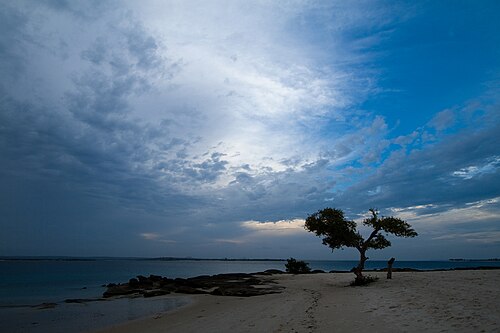
Nacala is a prominent city located in the Nampula Province of Mozambique, situated on the country's northeastern coast along the Indian Ocean. As one of Mozambique's key port cities, Nacala has a strategic geographic position, facilitating maritime trade and serving as an essential hub for import and export activities. The city is home to the third-largest deep-water port in Africa, which plays a pivotal role in the region’s economy by handling cargo transportation for various industries, including agriculture, mining, and manufacturing.
Historically, Nacala's growth has been influenced by its port and railroad connections. The Nacala Corridor, a supply route extending to Malawi, has further enhanced the city’s significance as a trade center. The economic landscape of Nacala is diverse, with agriculture being a substantial part of its local economy. The area is known for its production of crops such as cashews, maize, and cotton, and has been working towards expanding agricultural exports despite facing challenges like infrastructure deficits and climatic variations.
In addition to its economic activities, Nacala boasts a rich cultural heritage, shaped by various ethnic groups and historical influences, including Arab and Portuguese colonization. The city is characterized by its vibrant marketplaces, where local artisans sell crafts and fresh produce, reflecting the community's traditions and lifestyle. With its scenic coastal views and proximity to beautiful beaches, Nacala is also beginning to attract tourism, providing opportunities for further development. However, local governance faces the challenge of balancing economic growth with sustainable practices to preserve the environment and enhance the quality of life for its residents. As Mozambique continues to evolve, Nacala remains an essential player in the nation’s economic and cultural landscape.
Facts about Nacala
- Nacala is home to the largest deep-water port in Mozambique, which plays a crucial role in international trade and shipping.
- The city has a unique geographical advantage, located on a natural bay that is well-sheltered from rough seas, making it an ideal port.
- Nacala serves as an important trade hub for landlocked neighboring countries, particularly Malawi, facilitating their access to maritime routes.
- The Nacala Corridor, which includes a railway connecting Mozambique to Malawi, is vital for economic development and regional integration.
- Nacala's local economy is significantly supported by agriculture, particularly through the cultivation of crops such as tobacco and cotton.
- The city is known for its stunning beaches and warm climate, making it a growing destination for tourism within Mozambique.
- Nacala has a diverse cultural heritage, influenced by various ethnic groups, including the Ndau and Makua peoples, leading to rich traditions and festivals.
- The city features the Nacala Airport, which is one of the most important airports in the northern region of Mozambique, improving connectivity.
- Nacala holds a number of historical landmarks, including colonial-era architecture that showcases its Portuguese influence.
- In recent years, the city has attracted foreign investments, particularly in sectors like infrastructure, mining, and energy, contributing to its growth.