Nalgonda, India
- 121,826 people
- 2 places to visit
- 17.0577, 79.2684
Places to Visit (2)
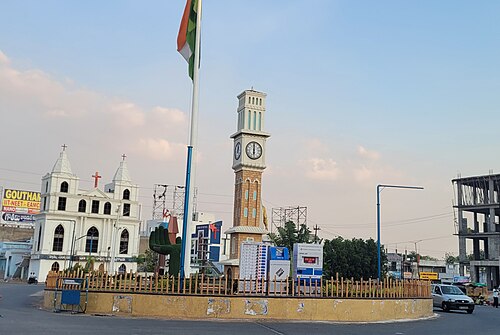
Nalgonda is a city located in the southern state of Telangana, India. It serves as the administrative headquarters of the Nalgonda district and is situated approximately 90 kilometers from the state capital, Hyderabad. Historically significant, Nalgonda has roots dating back to ancient times, with links to the Kakatiya dynasty and the Qutub Shahis. The city is known for its rich heritage, evident through the remnants of various historical structures, including forts, temples, and mosques. Notably, the Bhongir Fort, built in the 10th century, stands as a prominent landmark and reflects the architectural prowess of the time.
Geographically, Nalgonda lies at the intersection of several important trade routes, making it a vital hub for commerce and agriculture. The economy of Nalgonda is primarily agrarian, with rice, maize, and cotton being the dominant crops. The region is also recognized for its production of high-quality granite and limestone, which contribute to its industrial landscape. Nalgonda is home to several educational institutions, including engineering colleges and polytechnics, and has made significant strides in healthcare and infrastructure over recent years. The city’s diverse culture is showcased through various festivals, which are celebrated with enthusiasm, reflecting the local traditions and communal harmony. Overall, Nalgonda is a blend of historical significance, economic potential, and vibrant cultural life, making it an integral part of Telangana's identity.
Facts about Nalgonda
- Nalgonda is known for its rich historical and cultural heritage, with roots dating back to ancient Buddhist and Hindu civilizations.
- The city is famous for the ancient Buddhist site of Nagarjunakonda, which features numerous stupas and sculptures, highlighting the region's significance in early Buddhist history.
- Nalgonda is renowned for its exquisite handloom products, particularly the 'Nalgonda 'Beddings,' which are known for their unique patterns and craftsmanship.
- It is home to the Nalgonda Fort, a historical landmark built during the reign of the Kakatiya dynasty in the 12th century, offering panoramic views of the surrounding landscape.
- The city is located near the Pochampad Dam, which plays a critical role in irrigation and hydroelectric power generation, contributing to the agricultural economy of the region.
- Nalgonda is known for its unique rock formations, including the stunning Bhongir Fort, which is perched on a colossal monolithic rock and dates back to the 10th century.
- The district of Nalgonda has one of the largest reserves of limestone in India, making it a significant player in the cement industry due to its numerous cement factories.
- Nalgonda hosts the annual 'Buddha Jayanti' festival, celebrating the birth and teachings of Gautama Buddha, attracting thousands of devotees and tourists alike.
- The city has been a focal point in the Telangana movement, advocating for the formation of a separate state from Andhra Pradesh, which emerged in 2014.
- Nalgonda's diverse culture includes various folk traditions, dance forms, and music, making it an important hub for the preservation of Telangana's cultural identity.