Nam Định, Vietnam
- 193,499 people
- 11 places to visit
- 20.4388, 106.1621
Places to Visit (11)
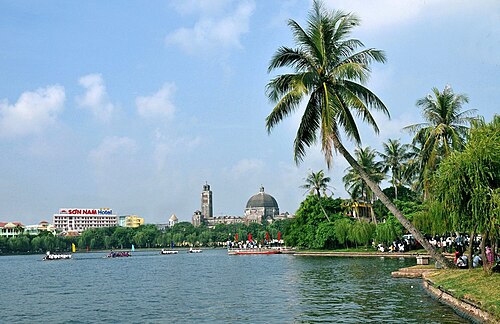
Nam Định is a city located in the northern part of Vietnam, known for its rich historical significance and cultural heritage. Situated along the Red River Delta, it is the capital of Nam Định Province and lies approximately 90 kilometers southeast of Hanoi, the capital of Vietnam. The city has a population of around 250,000 people and covers an area of approximately 70 square kilometers. Nam Định has played a crucial role in Vietnam's history, particularly during the early dynasties when it served as a political and cultural center. The city is recognized for its well-preserved historical architecture, including temples, pagodas, and ancient houses that reflect the traditional Vietnamese architectural style.
One of the most notable landmarks in Nam Định is the Tran Temple, dedicated to the Tran dynasty, which ruled Vietnam during the 13th and 14th centuries and is revered for its achievements in repelling Mongol invasions. Another significant site is the Phu Giay Pagoda, associated with the legendary Buddhist nun, Thiên Hương, and attracts many pilgrims. Nam Định is also renowned for its vibrant traditional crafts, particularly silk weaving and embroidery, which draw inspiration from the region's natural beauty and cultural motifs. The city's annual festivals, such as the Tran Temple Festival, showcase its cultural richness through traditional performances, rituals, and ceremonies.
In recent years, Nam Định has made strides in economic development, transitioning from a primarily agricultural economy to a more diversified one, incorporating manufacturing and services. The local government has invested in infrastructure improvements to facilitate trade and attract tourism, helping to foster growth while preserving the city's historic charm. Visitors to Nam Định can experience its unique blend of history and modernity, making it a noteworthy destination for both domestic and international travelers interested in exploring Vietnam’s cultural landscape.
Facts about Nam Định
- Nam Định is known as the 'Land of Religious Processions' due to its rich cultural heritage and numerous temples and pagodas.
- The city is home to the famous Tran Temple Complex, which honors the Tran dynasty, a significant period in Vietnamese history known for its victories against foreign invaders.
- Nam Định hosts the annual 'Festival of the Tran Temple' (Lễ hội đền Trần), which attracts thousands of visitors and features traditional rituals, folk games, and culinary delights.
- The city is renowned for its traditional textile industry, especially the production of 'Nam Định silk' which is highly valued for its quality.
- Nam Định was the provisional capital of Vietnam during the resistance against French colonial rule, before the capital was moved to Hanoi.
- The region is famous for its unique cuisine, including dishes like 'Bánh xèo Nam Định,' a savory pancake that is a local specialty.
- Nam Định is recognized for its role in the development of Vietnamese literature and has produced many renowned writers and poets, especially during the 20th century.
- The city's architecture features a mix of French colonial buildings and traditional Vietnamese structures, reflecting its historical significance and cultural diversity.
- Nam Định is also known for its many lakes and rivers, providing a picturesque environment that differentiates it from other urban areas in Vietnam.
- The city has a strong educational reputation, being home to many significant universities and colleges that attract students from various provinces.