Nancy, France
- 105,058 people
- 18 places to visit
- 48.6921, 6.1844
Places to Visit (18)
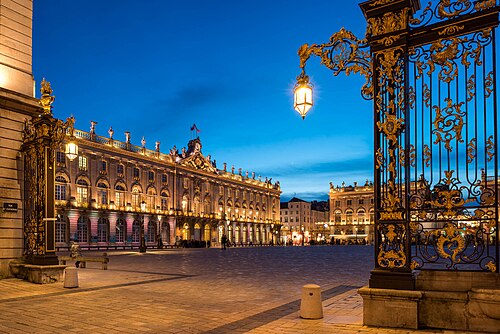
Nancy is a city located in the northeastern part of France, serving as the capital of the Meurthe-et-Moselle department within the Grand Est region. The city has a rich historical legacy, having been first documented in the 1050s. It flourished during the 18th century under the reign of Stanislas Leszczyński, the deposed King of Poland, who significantly influenced its architectural and urban development. Stanislas envisioned a modern city, leading to the creation of the Place Stanislas, now a UNESCO World Heritage site, celebrated for its stunning wrought iron gates, grand fountains, and elegant neoclassical buildings. This central square, along with the nearby Place de la Carrière and the Place d'Alliance, forms an essential part of the city's famed architectural ensemble.
Nancy is not only known for its architectural beauty but also for its vibrant cultural scene. The city hosts various museums, including the Musée des Beaux-Arts, which houses an extensive collection of artworks from the Middle Ages to contemporary pieces, including works by renowned artists such as Caravaggio and Delacroix. Additionally, the city is home to the highly regarded Lorraine Regional and the École de Nancy, an art and design movement that emerged in the late 19th century emphasizing decorative arts influenced by natural forms. Nancy also maintains a lively music and theater scene, punctuated by events like the Nancy Jazz Pulsations festival and the Grand Nancy Opéra. The city has a diverse population, characterized by a significant student presence due to the renowned universities and engineering schools, contributing to a vibrant and youthful atmosphere.
Moreover, Nancy's location places it at the crossroads of European culture and history, situated close to the borders of Luxembourg and Germany, fostering a multicultural environment. The city is well-connected through its transportation infrastructure, including the Nancy-Ville railway station, making it an accessible destination for travelers and tourists alike. With its blend of history, culture, and education, Nancy stands out as a unique city in France, inviting visitors to explore its picturesque streets, indulge in its culinary offerings, and appreciate its artistic heritage. As a part of the larger Lorraine region, Nancy proudly reflects its traditions while dynamically engaging with modernity, making it a significant point of interest in the French landscape.
Facts about Nancy
- Nancy is known for its stunning Place Stanislas, a UNESCO World Heritage site, famous for its 18th-century architecture and beautiful wrought-iron gates.
- The city was once the capital of the Duchy of Lorraine and played a significant role in the political history of France, especially during the 30 Years' War.
- Nancy is the birthplace of the renowned Art Nouveau movement, with the École de Nancy influencing artists and architects across Europe.
- The city hosts the Nancy Jazz Pulsations festival, one of the most important jazz festivals in France, attracting talents from around the world.
- The stunning Basilica of Saint-Epvre, known for its neo-Gothic architecture, is a distinguishing landmark that showcases the city's rich religious heritage.
- Nancy is home to the renowned University of Lorraine, which boasts a strong reputation in research and innovation in various fields.
- The city features the beautiful Parc de la Pépinière, a large public park that includes a rose garden, a small farm, and an open-air theatre.
- In the 18th century, Nancy was the host for the assembly of the Assembly of the Nobility, a significant event that highlighted the city's importance in regional governance.
- The Lorraine Museum in Nancy houses a vast collection of art and artifacts, reflecting the unique cultural heritage of the Lorraine region.
- Nancy's annual Christmas market is one of the largest in France, offering a charming atmosphere with festive lights and local artisanal products.