Nanjing, China
- 9,314,685 people
- 12 places to visit
- 32.0584, 118.7965
Places to Visit (12)
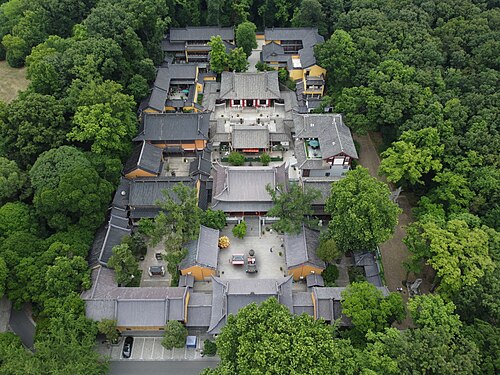
Nanjing, the capital city of Jiangsu Province in eastern China, holds a significant place in the country's history and culture. Situated along the south bank of the Yangtze River, Nanjing is one of China's four ancient capitals, having served as the capital during several dynasties, including the Eastern Wu, the Ming Dynasty, and the Republic of China. The city boasts a rich historical heritage, with numerous landmarks that reflect its past, including the Ming Xiaoling Mausoleum, the Confucius Temple, and the Nanjing Massacre Memorial Hall, which commemorates the tragic events during the Second Sino-Japanese War.
Modern Nanjing is a vibrant metropolis that combines historical significance with rapid urban development. As of the latest estimates, the city's population exceeds 8 million, making it one of the most populous cities in China. Its economy is diverse, with strong sectors in education, research, manufacturing, and technology. Nanjing is home to several prestigious universities, such as Nanjing University and Southeast University, which contribute to its reputation as an educational hub. The city is also recognized for its beautiful landscapes, with the Purple Mountain offering recreational opportunities and scenic views, further enhancing Nanjing's appeal as a key destination for both tourists and residents.
Transportation infrastructure in Nanjing is well-developed, featuring an extensive network of roads, railways, and an international airport. The Nanjing Yangtze River Bridge, a symbol of the city, connects the north and south banks of the river and has become an iconic landmark. Nanjing hosts various cultural events and festivals, including the Nanjing International Plum Blossoms Festival, which attracts visitors from around the world. Overall, Nanjing is a city where historical significance converges with modernity, cementing its status as a vital cultural and economic center in China.
Facts about Nanjing
- Nanjing served as the capital of several dynasties, including the Ming Dynasty, when it was known as the 'Southern Capital'.
- The Nanjing Massacre in 1937 was one of the darkest events in modern Chinese history, leading to a memorial and museum dedicated to its victims.
- The city is home to the Ming Xiaoling Mausoleum, a UNESCO World Heritage site and the burial site of the Hongwu Emperor, the founder of the Ming Dynasty.
- Nanjing has the world's oldest and largest city wall, which was built in the early Ming period and spans 35 kilometers (22 miles).
- The Yangtze River, the longest river in Asia, flows through Nanjing, offering significant historical and economic importance to the city.
- Nanjing is known for its rich cultural heritage, including being the birthplace of the Chinese literature movement in the early 20th century.
- The city is famous for its Confucius Temple (Fuzimiao), a cultural and educational center that showcases traditional Chinese architecture.
- Nanjing is a prominent center for education, housing some of China's top universities, including Nanjing University, one of the oldest and most prestigious.
- The Nanjing Yangtze River Bridge is the first bridge built by China over the Yangtze River and stands as a symbol of national pride.
- Every December, Nanjing holds a series of events commemorating the victims of the Nanjing Massacre, emphasizing its commitment to peace and remembrance.