Naples, Italy
- 909,048 people
- 18 places to visit
- 40.8518, 14.2681
Places to Visit (18)
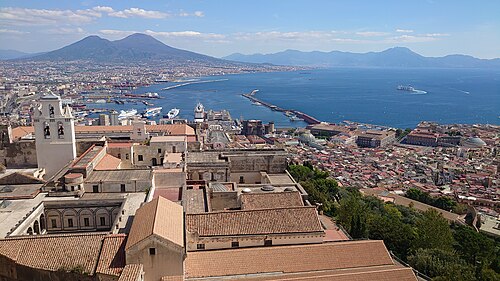
Naples, located in southern Italy, is one of the oldest continuously inhabited cities in the world, with a rich history that dates back over 2,800 years. Founded by the Greeks as Neapolis, meaning "New City," it has developed into a vibrant urban center that reflects various cultural influences, including Greek, Roman, and Spanish. The city is situated on the picturesque Bay of Naples, juxtaposed against the backdrop of the imposing Mount Vesuvius, which famously erupted in AD 79 and buried the nearby city of Pompeii. This catastrophic event, while devastating, has contributed to the significance of the area as a historical site, attracting millions of tourists each year who come to explore the ruins and the beautiful landscapes.
Naples is renowned for its culinary contributions, particularly as the birthplace of pizza. The Neapolitan pizza, characterized by its soft crust and high-quality ingredients, has gained recognition worldwide, earning UNESCO recognition in 2017 as an intangible cultural heritage. The city's streets are lined with bustling pizzerias, markets, and bars, embodying a lively atmosphere that reflects the local culture. Beyond gastronomy, Naples is home to numerous historical landmarks, including the Royal Palace, the Basilica of Santa Chiara, and the Castel Nuovo, showcasing its rich artistic and architectural heritage. The city also boasts several museums, such as the National Archaeological Museum, which houses one of the most extensive collections of Greco-Roman antiquities. Naples serves as a gateway to the Amalfi Coast and the islands of Capri and Ischia, further enhancing its appeal as a destination steeped in beauty, culture, and history.
Facts about Naples
- Naples is home to the world's oldest continuously active opera house, the Teatro di San Carlo, which opened in 1737.
- The city is famous for being the birthplace of pizza, particularly the Margherita pizza, which was created in 1889.
- Naples has a unique underground city, known as Napoli Sotterranea, which consists of ancient Roman aqueducts, Greek ruins, and catacombs.
- The historic center of Naples is a UNESCO World Heritage Site, containing more than 2,500 years of history and numerous architectural treasures.
- Naples is located near Mount Vesuvius, the only active volcano on the European mainland, which famously erupted in AD 79 and buried the cities of Pompeii and Herculaneum.
- The city has a distinctive dialect called Napoletano, which is recognized as a separate language with its own grammar and vocabulary.
- Naples boasts the largest collection of Renaissance and Baroque art in Italy, with numerous art museums, including the Capodimonte Museum and the National Archaeological Museum.
- The vibrant street markets, such as the Mercato di Porta Nolana, offer a unique culinary experience, highlighting Neapolitan street food like sfogliatella and fried pizza.
- Naples is known for its rich musical heritage, being the birthplace of the Neapolitan song genre, which gained popularity in the 19th century.
- The city's Posillipo Hill offers stunning views of the Bay of Naples and is renowned for its luxurious villas and picturesque landscapes.