Narbonne, France
- 50,776 people
- 10 places to visit
- 43.1843, 3.0031
Places to Visit (10)
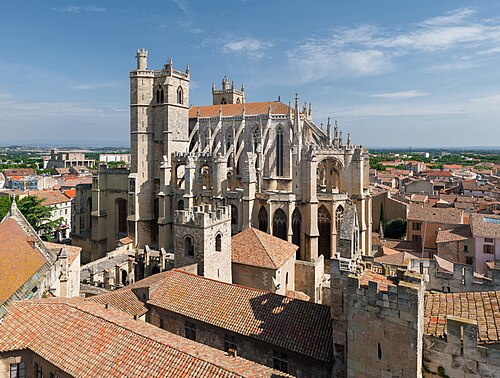
Narbonne is a historic city located in the Aude department in the Occitanie region of southern France. Situated near the Mediterranean coast and approximately 90 kilometers southeast of Toulouse, Narbonne has a rich cultural heritage that dates back to ancient Roman times. Founded around 118 BC, it was once a significant Roman port known as Narbo Martius, serving as the capital of Roman Gaul. This strategic location made it a hub for trade and commerce, and remnants of its past can still be observed today, including the extensive ruins of the Roman Via Domitia and the well-preserved Horreum, an underground warehouse used for storing goods.
In the Middle Ages, Narbonne continued to thrive as a center for trade, particularly in the wine and silk industries. The city became an important ecclesiastical seat, with the construction of the magnificent Narbonne Cathedral, which showcases a blend of Gothic and Romanesque architectural styles. The cathedral, dedicated to Saint Just and Saint Pasteur, features a remarkable facade and an impressive cloister, reflecting the city's significance during the height of its religious influence. Narbonne's charming medieval streets are lined with cafes, shops, and the bustling market at Les Halles de Narbonne, where locals and visitors alike gather to enjoy regional products, including the famed local wines, cheese, and seafood.
Today, Narbonne is known not only for its historical sites but also for its vibrant cultural scene. The city hosts various festivals and events throughout the year, celebrating its heritage and community spirit. Additionally, its proximity to the Mediterranean beaches and the nearby natural park of Narbonnaise en Méditerranée makes it a popular destination for outdoor activities such as hiking, cycling, and water sports. With a population of around 50,000 residents, Narbonne offers a blend of historical charm and modern amenities, making it an inviting destination for tourists seeking to explore the beauty and history of southern France.
Facts about Narbonne
- Narbonne is known as the first Roman colony in Gaul, established in 118 BC, which gives it a rich Roman heritage.
- The city is home to the 13th-century Narbonne Cathedral (Cathédrale Saint-Just et Saint-Pasteur), which, although not completed, features stunning architecture and a unique blend of styles.
- Narbonne has a unique link to the Mediterranean Sea via the Robine canal, which was once a key trade route and is now a scenic site for boating and leisure activities.
- The city hosts the annual 'Festival de la Cité', celebrating classical music and featuring over 100 concerts in various venues across Narbonne.
- Narbonne was once the capital of the Visigothic kingdom in the early Middle Ages, reflecting its historical significance in the region.
- The Palais des Archevêques, a former archbishop's palace, showcases a blend of Gothic and Renaissance architecture, making it a significant historical landmark in Narbonne.
- Narbonne's market, Les Halles de Narbonne, is a vibrant food market known for its fresh produce and local delicacies, distinguishing it from many other French cities.
- The city includes remnants of ancient Roman architecture, including the Via Domitia, the first Roman road in Gaul that linked Italy to Spain.
- Narbonne's proximity to the Haut-Languedoc Regional Nature Park allows residents and visitors to enjoy beautiful landscapes and outdoor activities unique to the region.
- The city boasts a rich historical collection, including the Archaeological Museum, which contains artifacts from its Roman past and other historical periods.