Narva, Estonia
- 54,409 people
- 11 places to visit
- 59.3797, 28.1791
Places to Visit (11)
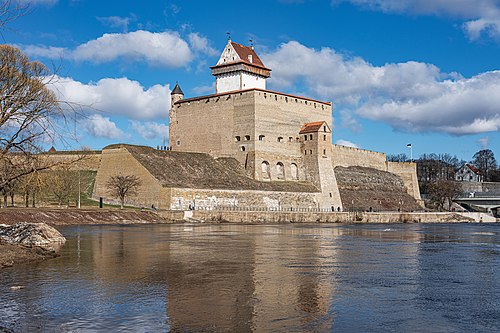
Narva is a city located in northeastern Estonia, positioned on the banks of the Narva River, which forms a natural border with Russia. As of the latest census, Narva has a population of around 55,000 people, making it one of Estonia's largest cities. Historically, Narva has been a point of strategic significance, influenced by various cultures and governments due to its location. The city was originally established as a trading post in the 13th century and later became a prominent center during the time of the Swedish Empire in the 17th century. Its rich history is evident in the architecture that lines its streets, with notable landmarks including the Narva Castle and the nearby Hermann Fortress, which stand as testaments to the city's past conflicts and power struggles.
In contemporary times, Narva faces challenges and opportunities typical of many border cities. The population is predominantly Russian-speaking, which reflects the legacy of the Soviet era, and the city has a unique cultural blend that distinguishes it within Estonia. The economy of Narva has historically been tied to industry, with significant contributions from the energy sector, particularly through the Narva power plants, which harness the abundant local resources. However, the transition to a market economy has presented challenges, leading to economic diversification efforts. Narva is also focused on promoting tourism, with initiatives aimed at showcasing its historical sites, natural beauty, and cultural events. As a city that embodies the complexities of identity, history, and development, Narva remains a fascinating example of Estonia’s diverse urban landscape.
Facts about Narva
- Narva is situated on the border with Russia, making it the easternmost city in Estonia and an important point of entry between the two countries.
- The Narva River serves as a natural border between Estonia and Russia, and it is known for its picturesque views and historic significance.
- Narva is home to the historic Narva Castle (Narva Linnus), which dates back to the 13th century and is one of the best-preserved medieval fortresses in Estonia.
- The city was significantly affected during World War II, with much of its historic architecture destroyed; however, some key landmarks, like the Narva Castle, have been restored.
- Narva features a unique blend of Estonian and Russian cultures due to its significant Russian-speaking population, which comprises about 85% of its residents.
- The city hosts the annual 'Narva Energy Run', attracting participants from both Estonia and neighboring countries, celebrating fitness and community spirit.
- One of Narva's notable landmarks is the prominent 'Star Fort' of Ivangorod, located directly across the river in Russia, illustrating the long historical ties and rivalry between the two neighbors.
- Narva has a distinct architectural style, showcasing both Soviet-era buildings and reconstructed historical sites, providing a unique contrast rarely seen in other Estonian cities.
- The city is known for its vibrant festivals, including the Narva Soundland, which is one of the largest electronic music festivals in the country, drawing international artists and visitors.
- Narva's location makes it a hub for trade and logistics between Estonia and Russia, facilitating economic and cultural exchanges not found in many other Estonian cities.