Navoiy, Uzbekistan
- 144,158 people
- 2 places to visit
- 40.0974, 65.3524
Places to Visit (2)
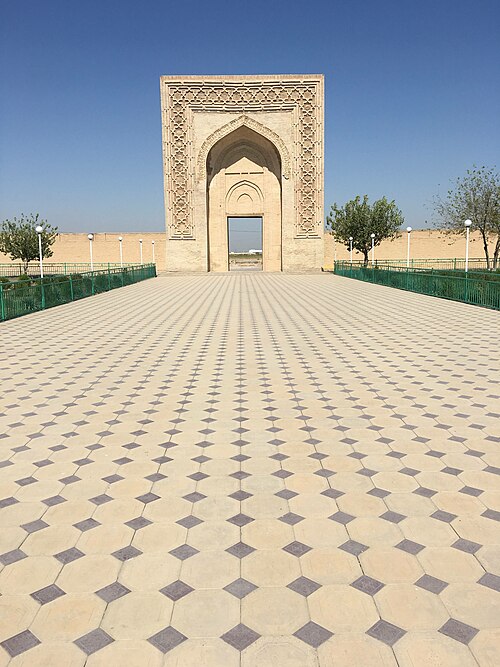
Navoiy, a city in central Uzbekistan, serves as the administrative center of the Navoiy Region and is notable for its industrial and cultural significance. Founded in the late 20th century and officially established in 1971, the city is named after the famous Persian poet and philosopher Alisher Navoi, who played a crucial role in the cultural heritage of the region. Navoiy's strategic location along key transportation routes has facilitated economic development, particularly in mining and heavy industry, including the extraction of gold, which is among the most prominent activities in the area. The city is also home to several industrial enterprises and contributes significantly to Uzbekistan's overall economic output.
Navoiy’s population has grown steadily since its establishment and now numbers around 135,000 residents. The city is characterized by its modern architecture, including public facilities and residential complexes that cater to its diverse demographic. Institutions of education, such as technical and vocational schools, are present, supporting the local workforce and aligning with the country’s emphasis on enhancing human capital. Additionally, Navoiy features cultural and recreational facilities that reflect the traditions and heritage of Uzbekistan, including theaters, parks, and museums dedicated to the life and works of Alisher Navoi. The city also plays host to various festivals and events that celebrate Uzbek culture and promote community engagement.
As Uzbekistan continues to grow and modernize, Navoiy maintains its role as a hub of economic activity and cultural exchange within the region. Its combination of rich history, industrial prowess, and ongoing development positions it as an essential part of Uzbekistan's future. The development of infrastructure, including roads, railways, and air travel, is expected to further enhance Navoiy's accessibility and attractiveness as a center for business and tourism, making it an integral part of the country’s overall growth strategy.
Facts about Navoiy
- Navoiy is named after the famous Persian poet and philosopher Alisher Navoiy, who is regarded as a national hero and cultural icon in Uzbekistan.
- The city was founded in 1958 and is one of the youngest cities in Uzbekistan, designed as a center for the mining and processing of mineral resources.
- Navoiy possesses the world's largest copper mine, the Almalyk Mining and Metallurgical Complex, making it an industrial hub.
- Navoiy is home to the Navoiy Theater of Music and Drama, a significant cultural venue that features performances in various forms of arts.
- The city's airport, Navoiy International Airport, is a key logistics center and one of the largest cargo airports in Central Asia, serving as a transit point for various freight flights.
- Navoiy is notable for its extensive parks and gardens, including the central park named after Alisher Navoiy, which is a popular recreation area.
- The city hosts the annual 'Navoiy Harmony Festival', celebrating local art, music, and cultural heritage, drawing participants from across the region.
- Navoiy is strategically located near significant historical sites, including the ancient Silk Road cities of Samarkand and Bukhara, making it a convenient stop for travelers.
- The city's development was primarily influenced by the Soviet Union’s industrialization policies, which led to rapid growth and urbanization in the mid-20th century.
- Navoiy has a diverse population, with a mix of ethnic groups, contributing to a rich cultural tapestry that reflects both traditional and modern influences.