Nay Pyi Taw, Myanmar
- 925,000 people
- 5 places to visit
- 19.7633, 96.0785
Places to Visit (5)
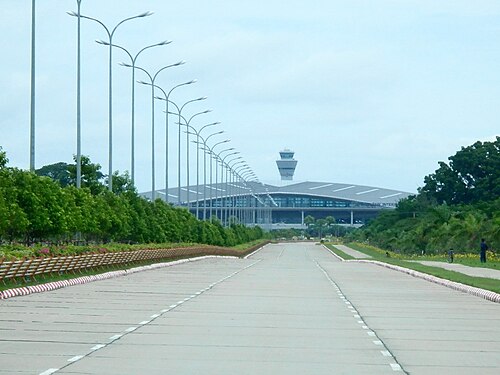
Nay Pyi Taw, the capital city of Myanmar, was officially designated as the country's administrative center in March 2006, replacing Yangon (formerly known as Rangoon) in this role. The city is strategically located in the central part of Myanmar, approximately 320 kilometers north of Yangon and around 400 kilometers south of Mandalay. Its establishment as a planned city involved the construction of wide boulevards, government buildings, hotels, and residential areas, all designed to accommodate the needs of government officials and foreign diplomats. As of 2021, Nay Pyi Taw's population is estimated to be around one million, making it one of the less densely populated capitals in Southeast Asia.
Architecturally, Nay Pyi Taw is characterized by its expansive layout and significant landmarks that reflect Myanmar's cultural heritage and governance. The city is home to the Pyidaungsu Illot Tower, which serves as the parliament building, showcasing a unique blend of traditional Burmese and modern design elements. Other notable sites include the Uppatasanti Pagoda, which resembles the famous Shwedagon Pagoda in Yangon and stands as a predominant feature in the city's skyline. Nay Pyi Taw also hosts several ministries, embassies, hotels, and government offices, providing a centralized location for national governance. Despite its modern infrastructure, Nay Pyi Taw has often been criticized for its low population density and relative lack of vibrancy compared to other major cities in Myanmar.
Economically, Nay Pyi Taw is emerging as a hub for commerce and trade, particularly with the establishment of various industrial zones on its outskirts. These developments aim to stimulate local economies and create job opportunities for the population. Moreover, the city's role as a diplomatic center has led to investments in infrastructure and amenities to support both local residents and international visitors. While Nay Pyi Taw may not have the historical and cultural richness of cities like Yangon or Mandalay, it represents a significant shift in Myanmar's political and administrative landscape, reflecting the country's ongoing evolution since the end of military rule in 2011. As Myanmar continues to develop, Nay Pyi Taw is likely to play an essential role in the country's future growth and governance.
Facts about Nay Pyi Taw
- Nay Pyi Taw is the capital city of Myanmar, officially designated in March 2006, making it one of the newest capital cities in the world.
- The city was constructed largely from scratch, with extensive planning that began in 2002, and it covers an area of approximately 7,054 square kilometers, making it one of the largest capitals by area.
- Nay Pyi Taw features wide, spacious boulevards and public parks, with a city planning design that emphasizes open space rather than dense urban construction.
- The city is known for its unique zone system, where different government ministries, hotels, and residential quarters are segregated into distinct areas.
- The Uppatasanti Pagoda in Nay Pyi Taw is a prominent landmark, modeled after the famous Shwedagon Pagoda in Yangon, and is one of the tallest pagodas in Myanmar.
- Nay Pyi Taw has several important governmental buildings including the Parliament building, which was completed in 2012 and is one of the largest legislative buildings in the region.
- The city is not densely populated compared to other major cities in Myanmar, resulting in a lower population density and a more tranquil environment.
- Nay Pyi Taw was built with the aim to promote balanced regional development in Myanmar and to alleviate congestion in Yangon.
- The city hosts several international events and conferences, underscoring its role as a political and diplomatic hub in Myanmar.
- Nay Pyi Taw contains an extensive array of hotels, with many built specifically to accommodate international visitors, giving it a different atmosphere than other cities in the country.