Newton-le-Willows, United Kingdom
- 21,782 people
- 9 places to visit
- 53.4529, -2.6351
Places to Visit (9)
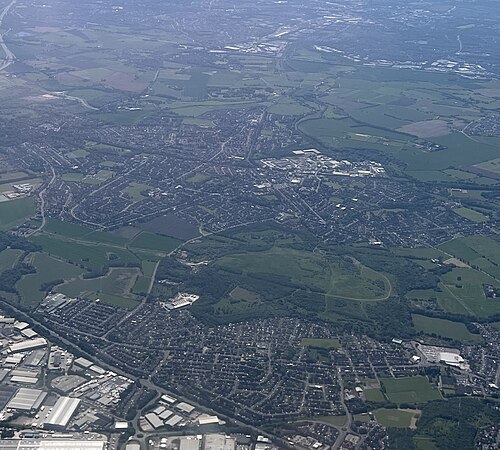
Newton-le-Willows is a town in the Metropolitan Borough of St Helens, located in Merseyside, England. Situated approximately 18 miles west of Manchester and around 7 miles east of Liverpool, it lies within the historic county of Lancashire. The town has a population of around 20,000 residents, and its origins can be traced back to the 13th century, when it was primarily a rural settlement. The name "Newton" is derived from the Old English for "new farm," while "le-Willows" likely refers to the presence of willow trees in the area. The town experienced significant growth during the industrial revolution, particularly through coal mining and textiles, which played a vital role in shaping its economic landscape.
Newton-le-Willows is characterized by its rich historical heritage, evident in its architecture and landmarks. Notable sites include the Grade II listed St. Peter’s Church, built in 1825, which showcases beautiful stained glass and a prominent tower. The town also boasts the historic market square, which has been a center of community life for centuries. Modern amenities include a range of shops, restaurants, and recreational facilities, making it a desirable place for families and commuters alike. The local transport infrastructure is well-developed, with the Newton-le-Willows railway station providing direct services to both Manchester and Liverpool, enhancing connectivity to larger urban centers.
In addition to its industrial history, Newton-le-Willows is surrounded by natural beauty, with parks and green spaces that offer residents and visitors opportunities for outdoor activities. The nearby Sankey Valley Park, a linear park created along the former Sankey Canal, provides walking and cycling paths, attracting those interested in leisure activities and wildlife observation. Local events and community initiatives foster a sense of belonging and pride among residents, ensuring that Newton-le-Willows continues to thrive as a vibrant and welcoming town within the United Kingdom.
Facts about Newton-le-Willows
- Newton-le-Willows is known for its historic connection to the Roman settlement of 'Culcheth', which showcases its ancient heritage.
- The town is home to the Earlestown railway station, notable for being one of the first examples of a British railway station with a large, grand facade, dating back to the 19th century.
- Newton-le-Willows has a significant history in coal mining, with several collieries operating in the area throughout the 19th and 20th centuries.
- The town was the birthplace of the famous locomotive engineer, Sir William Stanier, who played a crucial role in the development of steam locomotives for the London, Midland and Scottish Railway.
- Newton-le-Willows has a strong sporting culture, with a rich history of rugby league, being the home of the historic club Newton Storm and the recent success of the community-based rugby initiatives.
- The town features a unique 'Jubilee Park', a green space that includes the historic 'Mosaic of Newton', celebrating local history and community achievements.
- Newton-le-Willows holds an annual 'Newton Festival' which celebrates local arts, culture, and community spirit, drawing visitors from surrounding areas.
- The St. Peter's Church in the town has origins dating back to the Norman period and is known for its stunning architecture and historical significance.
- The area is home to the historic 'Crowley Hall', a 16th-century building that is among the oldest surviving structures in the town, reflecting its long-standing heritage.
- Newton-le-Willows is strategically located between Liverpool and Manchester, making it an important transport hub, with recent investment in infrastructure enhancing its connectivity.