Nicosia, Cyprus
- 200,452 people
- 15 places to visit
- 35.1856, 33.3823
Places to Visit (15)
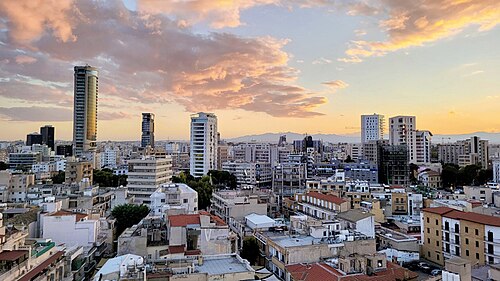
Nicosia, the capital of Cyprus, is the largest city on the island and serves as its administrative, economic, and cultural center. Situated at the crossroads of Europe, Asia, and Africa, it boasts a rich history that spans over 4,500 years. Nicosia is unique in that it remains the last divided capital in Europe, a situation that arose following the Turkish invasion of Cyprus in 1974. The city is divided into the Greek Cypriot south and the Turkish Cypriot north, with the Green Line, a buffer zone established by the United Nations, separating the two sectors. This division has had profound implications for the city’s development, leading to distinct cultural identities and governance in the respective areas.
The old city of Nicosia is characterized by its impressive Venetian walls, which were constructed in the late 16th century and provide a glimpse into the city's historical significance. Within these walls, visitors can explore narrow streets filled with shops, cafes, and historical landmarks, including the Selimiye Mosque, which was formerly St. Sophia Cathedral, and the Kyrenia Gate, one of the city's main entrances. The city is also home to numerous museums, such as the Cyprus Museum, which houses an extensive collection of artifacts that trace the island's history from antiquity to the present day. Nicosia's contemporary atmosphere is marked by a blend of traditional Cypriot culture and modern urban life, as evidenced by its vibrant arts scene, lively markets, and the increasing number of international businesses establishing a foothold in the region.
Despite its division, Nicosia is characterized by a spirit of resilience and adaptability. Efforts to promote reconciliation and cooperation between the two communities have gained momentum, especially with initiatives to restore historical sites and enhance cross-border interactions. The opening of crossing points has allowed for greater movement between the north and south, fostering a gradual thaw in relations and encouraging cultural exchanges. As Cyprus moves towards potential reunification, Nicosia continues to serve as a symbol of both division and hope, embodying the complexities of a city that has witnessed centuries of history and conflict while striving for a peaceful future.
Facts about Nicosia
- Nicosia is the last divided capital in Europe, divided between the Republic of Cyprus in the south and the Turkish Republic of Northern Cyprus in the north since 1974.
- The city features the historic Ledra Street, which connects the north and south and is known for its bustling shops and cafes, as well as being a key crossing point for visitors.
- Nicosia is home to the oldest continuously inhabited neighborhood, known as the 'Old City' or 'Within the Walls,' with impressive Venetian fortifications dating back to the 16th century.
- The Cyprus Museum in Nicosia is the largest archaeological museum in Cyprus, housing an extensive collection of artifacts dating back to the Neolithic period.
- Nicosia is the economic and financial center of Cyprus, hosting most banks and financial institutions as well as the Cyprus Stock Exchange.
- The city is known for its unique examples of Gothic architecture, particularly the St. John's Cathedral and the Selimiye Mosque, which was originally a cathedral before the Ottoman conquest.
- Nicosia hosts the annual 'Nicosia Pop-Up Festival,' a vibrant community event that showcases local art, music, and culture.
- The city is significant for its universities, including the University of Nicosia, which is the largest in the country and is known for its diverse student population and innovative programs.
- Nicosia's international airport, Larnaca International Airport, serves as the nearest major airport, making it a central hub for travel in and out of Cyprus.
- The Green Line, a United Nations-patrolled buffer zone, runs through Nicosia, separating the two sides of the city and serving as a reminder of the island's complex political history.