Niterói, Brazil
- 456,456 people
- 13 places to visit
- -22.8807, -43.1014
Places to Visit (13)
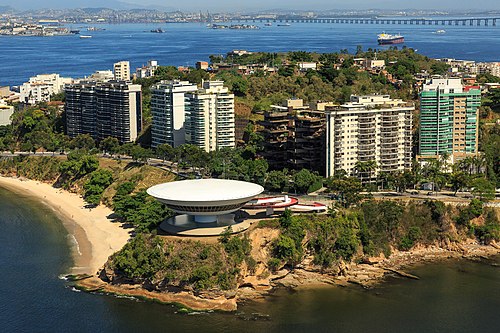
Niterói is a prominent city located in the state of Rio de Janeiro, Brazil, situated on the eastern shore of Guanabara Bay, directly across from the city of Rio de Janeiro. Known for its beautiful landscapes, Niterói boasts stunning views of the Sugarloaf Mountain and the Christ the Redeemer statue, which are visible from various points in the city. Established as a municipality in 1835, Niterói has a rich history and developed rapidly throughout the 19th and 20th centuries. The city's cultural heritage is reflected in its architecture, with notable structures such as the Contemporary Art Museum (MAC), designed by architect Oscar Niemeyer, and the historic Fortaleza de Santa Cruz, a 16th-century fortification that played a significant role in Brazil's colonial defense.
Economically, Niterói has transitioned over the years from a primarily agricultural society to a diversified urban center. Its economy is now fueled by sectors such as trade, services, and education, with the city being home to several universities and colleges that attract students from across the country. The city's proximity to Rio de Janeiro also contributes to a dynamic flow of commerce and tourism. Niterói features several coastal neighborhoods, including Icaraí and São Francisco, which are popular for their beaches, restaurants, and vibrant nightlife. The city's commitment to green spaces is evident in its parks and natural reserves, such as Parque da Cidade, which offers panoramic views and hiking opportunities. With a diverse population and an array of cultural activities, Niterói stands as a vibrant city that serves as a critical hub within the greater Rio de Janeiro metropolitan area.
Facts about Niterói
- Niterói is home to the iconic Niterói Contemporary Art Museum (MAC), designed by the renowned architect Oscar Niemeyer, which is famous for its futuristic architectural style.
- The city is located just across the Guanabara Bay from Rio de Janeiro and is connected by one of the longest bridges in the world, the Rio-Niterói Bridge.
- Niterói has a rich history that dates back to the indigenous people of the Tupi tribe, from whom it derived its name, meaning 'water that does not stand still.'
- The city played a significant role during the Brazilian Empire and served as the provisional capital of Brazil in 1889.
- Niterói is known for its beautiful beaches, including Icaraí Beach and São Francisco Beach, which are popular among locals and tourists alike.
- In 1999, Niterói won international recognition when it became the first Brazilian city to be designated as a 'City of Peace' by the United Nations.
- The city has a vibrant cultural scene, hosting various festivals, including the Niterói Jazz Festival, which attracts artists and audiences from around the world.
- Niterói is also recognized for its strong educational institutions, including the Fluminense Federal University (UFF), which is one of Brazil's leading universities.
- The city is notable for its historic forts, such as the Fort of Santa Cruz, which played important roles in protecting the coast during colonial times.
- Niterói's rich cultural heritage includes traditional seafood dishes and a unique gastronomy scene influenced by its coastal location.