Nizāmābād, India
- 305,438 people
- 6 places to visit
- 18.6725, 78.0941
Places to Visit (6)
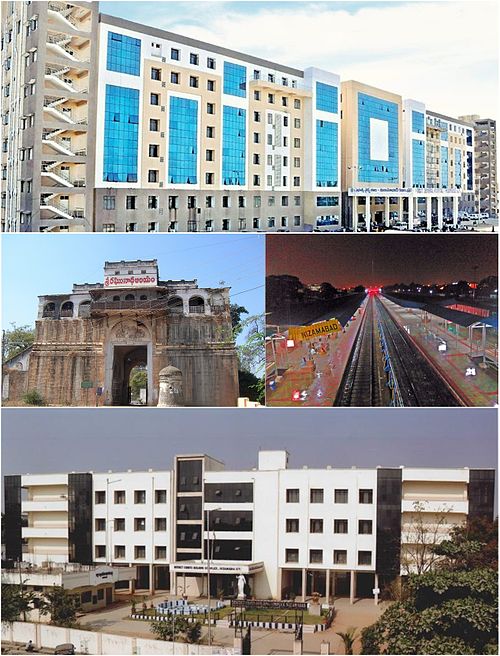
Nizāmābād is a prominent city located in the northern part of the Indian state of Telangana. As the administrative headquarters of the Nizamabad district, it serves as a crucial economic and cultural hub in the region. Situated approximately 175 kilometers from Hyderabad, the state capital, Nizāmābād is well-connected by road and rail, facilitating trade and travel. The city is known for its diverse population that reflects a blend of various cultures and traditions, which is also evident in its local cuisine and festivities.
Historically, Nizāmābād was part of the Nizam's dominion, a princely state that existed during British colonial rule in India. Owing to this historical background, the city's architecture and urban planning show influences from various styles, including Indo-Saracenic and Persian. The landscape is characterized by lush agricultural lands, primarily dedicated to the cultivation of crops such as rice, sorghum, and sunflower. The surrounding countryside is dotted with small villages, and agriculture remains a significant source of livelihood for the local population. Additionally, Nizāmābād boasts several attractions, including temples, lakes, and parks, attracting both residents and tourists.
The economy of Nizāmābād is multifaceted, encompassing agriculture, manufacturing, and service sectors. The city serves as a market for agricultural produce and has seen developments in textiles and small-scale industries. As Telangana continues to progress, Nizāmābād is also witnessing urbanization and infrastructure growth, bolstering its prospects for future development. Additionally, educational institutions and healthcare facilities are on the rise, contributing to the standard of living in the region. Overall, Nizāmābād represents a confluence of tradition and modernity, making it an important city in India’s socio-economic landscape.
Facts about Nizāmābād
- Nizāmābād, located in the Indian state of Telangana, is known for its rich history and heritage dating back to the Kakatiya dynasty.
- The city is famous for its unique landscape, featuring both mountainous terrain and fertile agricultural lands, making it a hub for farming activities.
- Nizāmābād is home to the historical shrine of Khurram Khan, a significant site that attracts devotees and tourists alike.
- The city hosts the Nizāmābād Fort, a 17th-century structure that showcases the architectural style of the era and reflects the city's historical importance.
- Nizāmābād is recognized for its vibrant cultural festivals, particularly the 'Maha Shivaratri' and 'Bonalu', which showcase the local traditions and community spirit.
- The local economy is bolstered by the production of Sunflower and Cotton, with Nizāmābād being one of the leading producers in India.
- Nizāmābād is strategically located at the crossroads of two national highways, enhancing its connectivity and trade potential.
- The city is also notable for its tourism potential, with nearby attractions such as the Shri Nizama Sufi Dargah and the Himayat Sagar Lake making it a popular destination for visitors.
- Nizāmābād has a strong educational presence, featuring several colleges that contribute to the higher education landscape in the region.
- The architecture of government institutions in Nizāmābād reflects both colonial and indigenous styles, making it unique among Indian towns.