Nordenham, Germany
- 27,714 people
- 10 places to visit
- 53.4987, 8.4924
Places to Visit (10)
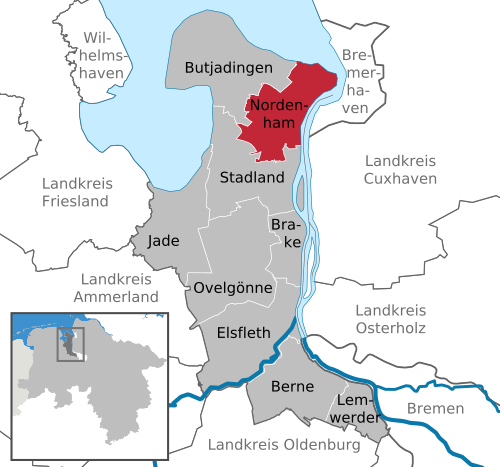
Nordenham is a town located in the Lower Saxony region of Germany, situated on the eastern bank of the Weser River, directly opposite the city of Bremerhaven. Established in the mid-19th century, Nordenham emerged as an important industrial center, particularly in shipbuilding and maritime industries, due to its strategic position on the river. The town's development accelerated with the establishment of the Norddeutsche Werft shipyard, which played a significant role in the local economy and identity. Today, Nordenham has a population of approximately 11,000 residents, contributing to its status as a modest-sized town with a close-knit community.
The cultural landscape of Nordenham is diverse, showcasing a blend of historical and modern influences. The town features several parks and recreational areas, making it a pleasant environment for both locals and visitors. Notable landmarks include the historic St. Stephen's Church and various monuments that reflect the town's maritime heritage. Nordenham also serves as an access point for holidaymakers visiting the nearby East Frisian Islands and the North Sea coast. With a focus on sustainability and urban development, the town is actively engaged in promoting eco-friendly initiatives, enhancing local infrastructure, and improving the quality of life for its residents. Overall, Nordenham represents a unique intersection of history, industry, and community in Northern Germany.
Facts about Nordenham
- Nordenham is known for its strategic location as a significant port town on the Weser River, serving as a gateway to the North Sea.
- The town was established in the 18th century as a response to the need for a new shipping route and has since developed into a key industrial hub.
- Nordenham is home to the largest plastic manufacturer in Germany, showcasing its importance in the country's chemical industry.
- The town hosts the annual 'Nordenhamer Hafenfest', a maritime festival celebrating the local shipping culture, featuring food, music, and boat parades.
- Nordenham has a strong maritime heritage, with the 'Historisches Schiffshebewerk' (Historic Ship Lift) being one of its notable engineering landmarks.
- The town features the 'Bürgerpark', a large public park designed in the English garden style, which is unique for a town of its size in the region.
- Nordenham has a significant portion of its population employed in shipbuilding and maritime-related industries, setting it apart from many other towns focused on different economic sectors.
- The town is also recognized for its commitment to environmental sustainability, being involved in projects aimed at promoting green energy and protecting the Weser estuary.
- Nordenham is closely linked with the nearby city of Bremerhaven, and together they form a vital shipping and logistics corridor in Germany.
- Historically, Nordenham was part of the district of Oldenburg but was incorporated into the district of Wesermarsch in 1977, reflecting its evolving administrative significance.