Nordhausen, Germany
- 43,912 people
- 11 places to visit
- 51.4984, 10.7931
Places to Visit (11)
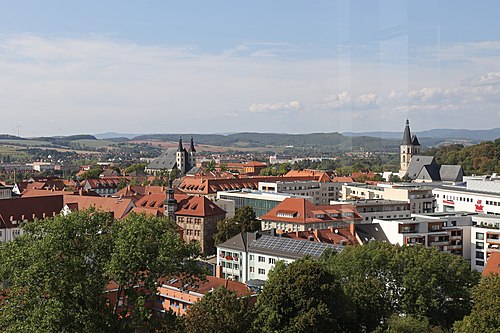
Nordhausen is a town located in the state of Thuringia, Germany, with a rich history and a vibrant cultural identity. Situated at the foot of the Harz Mountains, Nordhausen is approximately 55 kilometers southwest of the city of Halle and about 70 kilometers southeast of Göttingen. The town has a population of around 40,000 residents and is known for its historical architecture, significant economic contributions, and distinct regional traditions. It is also distinguished by its production of the famous Nordhäuser Doppelkorn, a type of schnapps that has been distilled in the region since the 15th century.
Historically, Nordhausen has been a center of trade and craftsmanship, thriving during the late Middle Ages due to its strategic location along key trade routes. The town has preserved numerous medieval buildings, including the St. Blaise's Church, with its impressive Gothic architecture and notable stained glass windows. The historic town square, with its half-timbered houses and vibrant marketplace, reflects the town's storied past. Following World War II, much of Nordhausen was rebuilt due to extensive damage, including the destruction of the main railway station and many residential areas. The economic landscape has evolved significantly since the reunification of Germany in 1990, transitioning from traditional manufacturing to diversified sectors such as retail, services, and technology.
Culturally, Nordhausen offers various festivals and events throughout the year, showcasing its local traditions and community spirit. The town celebrates its heritage with events like the Harz Mountain Festival and various Christmas markets, drawing visitors to experience its unique offerings. The surrounding natural landscape provides ample opportunities for outdoor recreation, attracting hikers and nature enthusiasts alike. Additionally, Nordhausen is a hub for education and innovation, hosting several institutions that contribute to the region's economic vitality. With its blend of historical significance and contemporary development, Nordhausen continues to be a notable city in Germany, reflecting the dynamic interplay of tradition and modernity.
Facts about Nordhausen
- Nordhausen is known for its unique local specialty, Nordhäuser Rotspon, a type of wine that has been produced in the region since the Middle Ages.
- The city has a rich medieval history, with many well-preserved historical buildings, including the St. Blasii Church, which dates back to the 14th century.
- Nordhausen played a significant role in the production of salt, with the nearby salt mines being a key economic driver in the region during the Middle Ages.
- The city was significantly affected by World War II, leading to considerable destruction, but has since rebuilt and preserved many historical sites.
- Nordhausen is home to the historic 'Nordhausen State Theatre', which has been a cultural landmark in the city since its opening in 1900.
- The city is located on the scenic edge of the Harz Mountains, offering natural attractions and outdoor activities that distinguish it from other towns in Germany.
- Nordhausen has a significant industrial heritage, particularly in brewing and the manufacture of tobacco products, which were prominent during the 19th century.
- The city holds an annual festival known as the 'Nordhäuser Stadtfest', which celebrates local culture, food, and music, drawing visitors from surrounding areas.
- Nordhausen is associated with the German Resistance, as it was a center for anti-Nazi activities during the late 1930s and early 1940s.
- The city's location at the junction of important trade routes historically facilitated its growth as a commercial hub, pulling influences from various regions.