Norilsk, Russian Federation
- 140,800 people
- 1 places to visit
- 69.3558, 88.1893
Places to Visit (1)
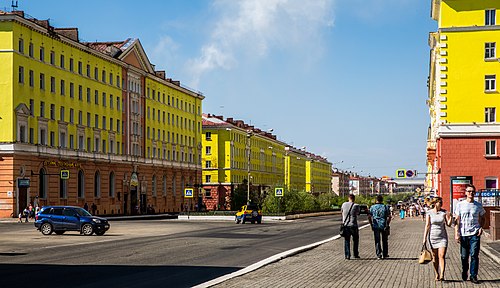
Norilsk is a city located in the Russian Federation, within the Arctic Circle. It lies on the banks of the Yenisei River and serves as the administrative center of the Norilsk Urban Okrug in the Krasnoyarsk Krai region. Established in 1935, Norilsk rapidly evolved into a significant industrial center, primarily due to its vast deposits of nickel, copper, palladium, and other precious metals. As a result, the Norilsk Nickel Company became one of the world's largest producers of nickel and palladium, shaping the city's economic landscape. Norilsk is known for its harsh climate, characterized by long, frigid winters and brief, cool summers, with temperatures regularly dropping below -30°C in winter months. This extreme environment has led to unique challenges for the city's infrastructure and its approximately 175,000 residents.
The city’s history is also marked by its association with Soviet-era labor camps. In the 1930s, it became a destination for political prisoners, who were forced to work in the mines and factories under dire conditions. This legacy has influenced the city's cultural and social environment. Despite its industrial prominence, Norilsk faces significant environmental issues, largely due to pollution from mining and smelting operations. The region has been classified as a severe ecological disaster zone, with high levels of sulfur dioxide and heavy metals affecting air and water quality. Efforts to mitigate these problems have been a focus of local governance, but the impact on the surrounding ecosystems remains a significant concern.
Norilsk is notable for being one of the few cities in the world that lacks a direct connection to the rest of Russia via road or rail, making air travel the primary means of access. This geographical isolation, combined with its industrial roots, creates a unique urban experience characterized by a blend of Soviet history, environmental challenges, and Arctic culture. Cultural life in Norilsk reflects this history, with various institutions dedicated to maintaining and promoting local art, music, and traditions, despite the harsh living conditions. As the city continues to grapple with its environmentally and historically rooted complexities, it remains an intriguing example of adaptation and resilience in one of the world's most extreme environments.
Facts about Norilsk
- Norilsk is one of the northernmost cities in the world and is situated above the Arctic Circle.
- The city is known for its large nickel and palladium mining industry, which is central to its economy and is one of the largest producers of these metals globally.
- Norilsk is an important industrial hub with severe environmental impacts due to pollution from mining and smelting activities, leading to it being classified as one of the most polluted cities in the world.
- It has a unique climate characterized by long, harsh winters and short, cool summers, with average winter temperatures often exceeding -30°C (-22°F).
- Due to its location in the Siberian tundra, Norilsk experiences polar night for about 45 days in winter when the sun does not rise, as well as midnight sun in summer.
- Norilsk was founded as a Soviet labor camp in 1935, originally intended for political prisoners and forced labor, which deeply influenced its development.
- The city is one of the few in Russia that is not located on a railway line, making transportation particularly challenging.
- Norilsk is home to the famous Norilsk Nickel, which is one of the largest mining companies in the world and has played a significant role in the city's growth.
- It features the Transpolar Main Pipeline, which is crucial for transporting oil from Western Siberia to the Murmansk region, highlighting its role in the energy sector.
- The city has a distinct architectural style influenced by Soviet design, with numerous high-rise buildings, cultural institutions, and monuments commemorating its industrial and historical heritage.