Nouakchott, Mauritania
- 1,184,530 people
- 7 places to visit
- 18.0735, -15.9582
Places to Visit (7)
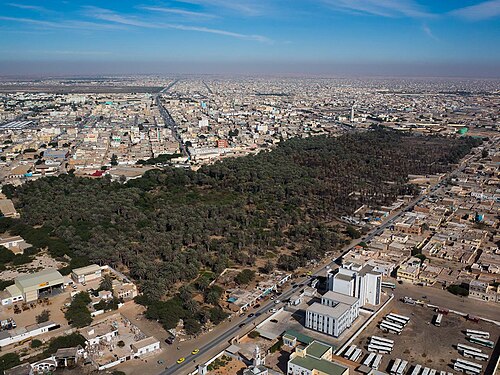
Nouakchott is the capital and largest city of Mauritania, located on the Atlantic coast of Northwest Africa. Established as capital in 1960, shortly after Mauritania gained independence from France, it has since evolved into a central hub for the country’s political, economic, and cultural activities. The city lies approximately 30 kilometers from the coast, within the Sahara Desert, which gives it a unique blend of desert and coastal influences. Nouakchott is characterized by its hot desert climate, with average temperatures ranging from 20°C (68°F) in winter to over 40°C (104°F) in summer. The city experiences minimal rainfall, primarily occurring from July to September, which makes water scarcity a significant concern.
Economically, Nouakchott plays a crucial role in Mauritania's development, functioning as the focal point for trade and commerce. The city's economy relies heavily on fishing, agriculture, and trade. The Port of Nouakchott is vital for the country's fishing industry, providing a gateway for exports and imports. Additionally, the city has witnessed an influx of migrants from rural areas seeking better opportunities, which has led to a population growth that currently exceeds one million residents. This demographic change has spurred urbanization and exacerbated issues such as housing shortages and infrastructure challenges. The government has focused on urban development initiatives to address these concerns and improve living standards.
Culturally, Nouakchott reflects the diverse heritage of Mauritania, which encompasses Arab, Berber, and African influences. Traditional markets, known as "souks," feature local handicrafts, textiles, and food products, showcasing the vibrant culture of the region. The city is also home to several important institutions, including universities and cultural centers, which promote education and artistic expression. Events such as the Nouakchott International Film Festival and ongoing artistic exhibitions celebrate Mauritania's rich cultural tapestry. Despite the challenges posed by rapid urbanization, Nouakchott remains a city of resilience and growth, positioned at the crossroads of tradition and modernity in a rapidly changing world.
Facts about Nouakchott
- Nouakchott is the capital and largest city of Mauritania, established as the capital in 1960 after the country gained independence from France.
- It is one of the few capital cities in the world that is located on the coast of the Sahara Desert, giving it a unique blend of desert and oceanic environments.
- Nouakchott has a significant population density compared to other cities in Mauritania, with a population of over 1 million people, making it a central hub for economic and cultural activities.
- The city is home to the National Museum of Mauritania, which showcases the country’s history and rich cultural heritage, a feature not commonly found in other Mauritanian towns.
- Nouakchott boasts the Port de Nouakchott, which is the main harbor in Mauritania, facilitating trade and fishing, and distinguishing it from inland towns.
- The city hosts the largest university in Mauritania, the University of Nouakchott, offering higher education opportunities that are not available in smaller towns.
- Nouakchott is known for its vibrant market scenes, particularly the Grand Market, where local artisans and traders sell a variety of goods, fostering a lively economy.
- The city's architecture reflects a mix of modern influences and traditional Mauritanian designs, making it visually distinct from other urban areas in the country.
- Nouakchott celebrates several national events, including Independence Day on November 28, with significant public festivities that reflect its status as the capital.
- The city's location along the Atlantic coast allows for a unique climate compared to other parts of Mauritania, providing it with milder temperatures and occasional rain, which is rare in the desert.