Novi Sad, Serbia
- 215,400 people
- 16 places to visit
- 45.2396, 19.8227
Places to Visit (16)
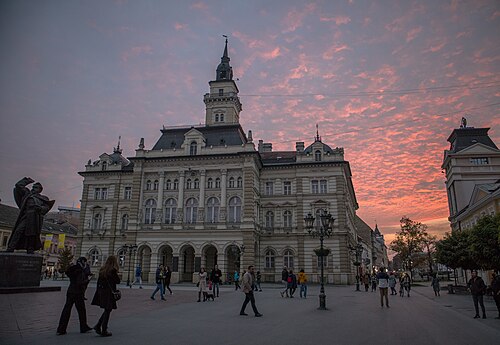
Novi Sad, the second-largest city in Serbia, is situated on the banks of the Danube River in the northern province of Vojvodina. Founded in the late 17th century, it has grown to become a significant cultural and economic center. The city is known for its diverse population, which includes Serbs, Hungarians, Slovaks, and other ethnic groups, contributing to its rich cultural fabric. Novi Sad is particularly famous for its vibrant arts scene and festivals, notably the EXIT Festival, an annual music event that attracts thousands of visitors from around the globe, showcasing both local and international artists.
The architectural landscape of Novi Sad is characterized by a blend of Baroque, Neoclassical, and modern styles, with notable landmarks such as the Petrovaradin Fortress. Often referred to as the "Gibraltar on the Danube," this impressive fortress dates back to the 18th century and offers stunning views of the city and the river. The city's historical center features charming squares, pedestrian-friendly streets, and structures like the Name of Mary Church, a beautiful Catholic church that epitomizes the city’s historical significance. Additionally, Novi Sad has a thriving university scene, home to the University of Novi Sad, which is one of the largest educational institutions in Serbia, attracting students from various countries.
Novi Sad’s economy is diverse and includes industries such as agriculture, manufacturing, and services. The city is also a hub for IT and innovation, supported by various initiatives and co-working spaces designed to foster entrepreneurship. The local government has made significant efforts to promote tourism, improve infrastructure, and enhance the quality of life for residents. As a result, Novi Sad is not only a picturesque destination for visitors but also a vibrant community that balances its rich history with modern development, making it an essential part of Serbia's cultural and economic landscape.
Facts about Novi Sad
- Novi Sad is known for hosting the EXIT music festival, which is one of Europe’s largest and most famous music festivals, attracting hundreds of thousands of visitors each year.
- The city is home to the Petrovaradin Fortress, often referred to as the 'Gibraltar on the Danube', which dates back to the 17th century and offers stunning views over the Danube River.
- Novi Sad has a unique cultural heritage, exemplified by its designation as a UNESCO City of Music in 2019, highlighting its vibrant music scene.
- The city is famous for its multicultural atmosphere, being a melting pot of Serbian, Hungarian, Slovak, and other cultures, which is reflected in its architecture and culinary traditions.
- Svetozar Miletić, a prominent Serbian politician and reformer of the 19th century, is a key historical figure born in Novi Sad, whose contributions are still celebrated in the city.
- Novi Sad is the administrative center of its own province, Vojvodina, which is renowned for its agricultural richness and cultural diversity.
- The Novi Sad Fair, held annually, is one of the largest exhibition venues in the Balkans, showcasing various industries and innovations.
- Novi Sad's The Museum of Vojvodina holds significant archaeological, historical, and ethnological collections that tell the story of the region's rich past.
- The city features the iconic Freedom Square (Trg Slobode), surrounded by important historical buildings such as the City Hall and the Name of Mary Church.
- Novi Sad played a crucial role in the 1848-1849 Hungarian Revolution, serving as a center of the revolutionary movement, further establishing its significance in Serbian and European history.