Nürnberg, Germany
- 515,543 people
- 19 places to visit
- 49.4543, 11.0746
Places to Visit (19)
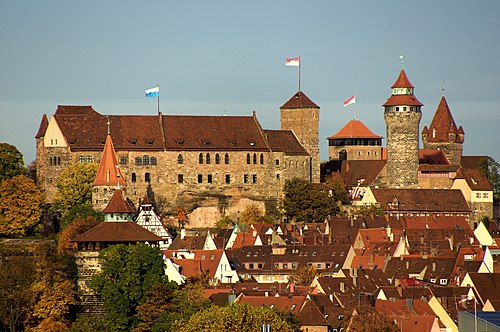
Nürnberg, the second-largest city in the German state of Bavaria, is renowned for its rich history and cultural significance. With a population of around 520,000, it serves as a vibrant hub in the region, blending a medieval past with modern innovations. The city’s history dates back to the early Middle Ages, when it rose to prominence as an important center for trade and politics within the Holy Roman Empire. Its strategic location along key trade routes contributed to its growth, making it a melting pot of culture and influence. Today, Nürnberg is celebrated for its well-preserved medieval architecture, including the iconic Nuremberg Castle, which dominates the city skyline and offers insight into its historical significance. The city is also famous for its Gothic Frauenkirche and the beautiful medieval Old Town, which attract tourists year-round.
In addition to its historical importance, Nürnberg plays a vital role in the cultural and economic landscape of Germany. It hosts several annual events, including the famous Christkindlesmarkt, a traditional Christmas market that draws millions of visitors each year, showcasing local crafts and culinary delights, such as gingerbread and sausage. The city is also known for being a center of arts and education, hosting various museums, including the German National Museum, which holds an extensive collection of artifacts representing German cultural history. Furthermore, Nürnberg is a significant industrial and economic center, with a focus on manufacturing and technology, particularly in machinery, automotive, and information technology sectors. Post-World War II, the city gained notoriety for its association with the Nuremberg Trials, where major war criminals were prosecuted, leaving a lasting legacy on international law and human rights. The blend of historical gravitas, cultural vibrancy, and modern economic growth makes Nürnberg a unique city that reflects both its past and its aspirations for the future.
Facts about Nürnberg
- Nürnberg is known as the 'City of the Holy Roman Empire' due to its significant role as a free imperial city during the Middle Ages.
- The Nuremberg Trials, held after World War II, were landmark military tribunals that established precedents for prosecuting war crimes, including the prosecution of key Nazi leaders.
- Nürnberg is famous for its medieval architecture, most notably the Nuremberg Castle, which dominates the city's skyline and served as a residence for Holy Roman Emperors.
- The city is celebrated for its unique Christkindlesmarkt, one of the oldest and most famous Christmas markets in the world, attracting millions of visitors each year.
- Nürnberg is the birthplace of the famous painter Albrecht Dürer, whose house is now a museum dedicated to his life and work.
- The city has a rich tradition of gingerbread (Lebkuchen) baking, and the Nürnberger Lebkuchen is a coveted treat with a protected geographical indication.
- Nürnberg is home to the Toy Museum (Spielzeugmuseum), which showcases a vast collection of toys and dolls, reflecting the city's legacy as a center for toy manufacturing.
- The city's Documentation Center Nazi Party Rally Grounds provides a critical history of the rise of the Nazi Party and the rallies that were held in Nürnberg.
- Nürnberg's historical significance is further highlighted by its beautifully preserved medieval old town, which is a UNESCO World Heritage site.
- The city hosts the annual Nuremberg International Human Rights Award, celebrating individuals and organizations contributing to the promotion of human rights worldwide.