Nuneaton, United Kingdom
- 92,698 people
- 17 places to visit
- 52.5225, -1.4723
Places to Visit (17)
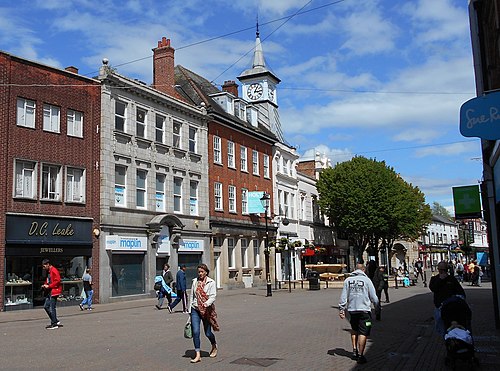
Nuneaton is a town located in the northwestern part of Warwickshire, England, approximately 9 miles (14 km) northeast of Coventry and 26 miles (42 km) east of Birmingham. With a population of around 86,000 residents, it is one of the largest towns in the county. The town's name is thought to derive from the Old English words "Nune," referring to a nun, and "ton," meaning town, which relates to the region's history of monastic activity. Nuneaton is situated at the junction of several major roads, including the A5 and A47, and is served by a railway line connecting it to London, Birmingham, and Leicester, making it a key transport hub in the Midlands.
Historically, Nuneaton's development was shaped by its textile manufacturing industry during the 19th century, particularly lace-making and hosiery, which provided significant employment and contributed to its growth. The town also has a rich cultural heritage, most notably being the birthplace of the renowned author George Eliot, whose real name was Mary Ann Evans. Eliot's connection to the town is commemorated with various landmarks, including a statue in the town center and the nearby George Eliot Hospital. In addition to its historical significance, Nuneaton boasts a variety of parks and recreation areas, such as Abbey Fields and Riversley Park, which enhance the quality of life for residents.
Modern Nuneaton has a vibrant town center with a mix of retail, dining, and entertainment options, including the Nuneaton Museum and Art Gallery, which showcases local history and art. The town is undergoing regeneration efforts that aim to improve infrastructure and attract new businesses. With its blend of historical significance, cultural contributions, and amenities, Nuneaton continues to evolve as a dynamic community while holding onto its rich past. Its strategic location within the Midlands makes it an appealing place for both residents and visitors, further solidifying its role as a key town in the region.
Facts about Nuneaton
- Nuneaton is historically known as the birthplace of the famous author George Eliot, whose real name was Mary Ann Evans, and her works are celebrated for their insightful portrayal of 19th-century life.
- The town is home to the historic Nuneaton Museum and Art Gallery, which houses an important collection of paintings, ceramics, and local artifacts, including works by prominent local artist, Sir Frank Markham Skipworth.
- Nuneaton was once a major coal mining town in the 19th and early 20th centuries, and its mining heritage is a distinctive part of its history, including the now-demolished Victoria Colliery.
- The Arbury Hall, located just outside Nuneaton, is a stately home and was the birthplace of George Eliot, featuring beautiful gardens and connections to the literary heritage of the area.
- Nuneaton holds an annual event called the Nuneaton Carnival, which has been celebrated for over 50 years and showcases a parade, live entertainment, and community activities.
- The town is served by the Nuneaton railway station, an important transport hub that links it to major cities like Birmingham and London, contributing to its role as a commuter town.
- Nuneaton features the quaint Bermuda Park, which was developed on the site of an old coal mine and includes a range of leisure facilities, shops, and restaurants.
- In 2019, a large mural was unveiled in Nuneaton to celebrate the legacy of George Eliot, highlighting the town's pride in its literary associations.
- The ancient landmark known as the 'Nuneaton Stone' is an important historic stone which reflects the town’s Anglo-Saxon history and remains a symbol of its heritage.
- Nuneaton’s town centre is distinctively characterized by its mix of modern shopping facilities and historical sites, creating a unique blend of old and new within the urban environment.