Nzérékoré, Guinea
- 226,426 people
- 1 places to visit
- 7.7478, -8.8253
Places to Visit (1)
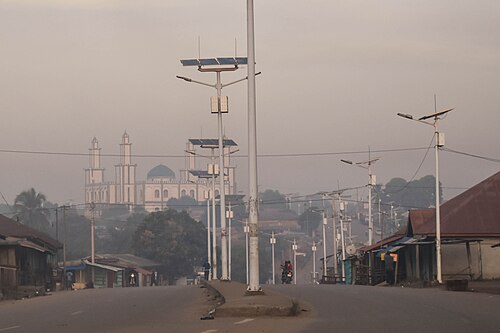
Nzérékoré is the capital city of the Nzérékoré Region in southeastern Guinea. Located in a lush, hilly landscape, the city serves as a crucial administrative and economic hub for the surrounding area. With a population of approximately 50,000 residents, Nzérékoré has a diverse ethnic composition, including the Kissi, Kpelle, and Mandinka peoples. The city is characterized by its vibrant markets, where local crafts, agricultural products, and traditional textiles can be found. Nzérékoré's economy is largely based on agriculture, with significant production of crops such as rice, cassava, and coffee, which play a vital role in both local sustenance and trade.
Nzérékoré holds cultural significance and is well-known for its rich traditions and festivals, attracting visitors and locals alike. The region is renowned for its natural beauty, including dense forests and waterfalls, which contribute to its appeal for eco-tourism. Notably, the nearby Guinea Forest Region is part of a larger tropical rainforest that is home to various endemic species of flora and fauna. The city's infrastructure includes educational institutions, healthcare facilities, and transportation networks that connect it to other parts of Guinea, particularly Conakry, the capital of the country. Despite facing challenges such as poverty and limited resources, Nzérékoré remains a vital center for commerce and culture in Guinea, playing a crucial role in the overall development of the nation.
Facts about Nzérékoré
- Nzérékoré is located in the Forest Region of Guinea, known for its lush greenery and biodiversity, differentiating it from more urbanized areas.
- The city is the capital of Nzérékoré Region and plays a significant role in the country's agriculture, particularly in the cultivation of crops like cassava and yams.
- Nzérékoré has a rich cultural tapestry, home to several ethnic groups including the Guerze, Kpelle, and Malinké, each contributing to the city's diverse traditions and languages.
- The city serves as a gateway to the Nzérékoré National Park, which is renowned for its wildlife, including elephants and numerous bird species, making it a unique ecological hotspot.
- Nzérékoré is known as a center of education in Guinea, with several notable institutions, including secondary schools and vocational training centers, promoting local development.
- Historical significance is marked by Nzérékoré's role in the resistance against colonial rule; it became a center for political organizing during the struggle for independence.
- The city hosts the annual Nzérékoré Festival, celebrating local culture, music, and dance, which attracts visitors from across the region, showcasing its vibrant heritage.
- Nzérékoré is strategically important due to its proximity to international borders, facilitating trade and cultural exchange with neighboring countries such as Liberia and Côte d'Ivoire.
- The local economy is heavily influenced by the artisanal production of handicrafts, textiles, and traditional jewelry, which are unique to Nzérékoré and represent the region's artistic heritage.
- Nzérékoré's climate is distinctively humid and tropical, providing unique growing conditions for various fruits and vegetables not commonly found in other parts of Guinea.