Oberhausen, Germany
- 219,176 people
- 16 places to visit
- 51.4878, 6.8633
Places to Visit (16)
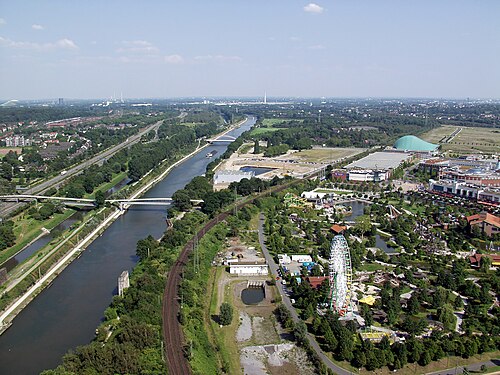
Oberhausen is a city located in the North Rhine-Westphalia region of Germany, and it is part of the Ruhr metropolitan area, which is one of the most densely populated and urbanized regions in Europe. Established in the mid-19th century, Oberhausen rapidly developed due to the booming coal and steel industries, which contributed significantly to its growth and economic strength. The city was officially chartered in 1862. Its industrial heritage is evident in various landmarks and museums, like the Ludwig Gallery, which showcases contemporary art in a former steel mill, and the Gasometer, a repurposed gas storage tank that now features exhibitions and offers panoramic views of the city.
Oberhausen is also known for its cultural and recreational offerings. The city's largest shopping center, the CentrO, is one of the biggest in Europe, attracting visitors not only for shopping but also for entertainment and dining options. The city is home to several parks and green spaces, such as the Oberhausen Botanical Garden and Kaisergarten, which provide areas for leisure and relaxation. Oberhausen's commitment to sustainable development and environmental conservation is further highlighted by initiatives aimed at revitalizing former industrial sites into green spaces. Additionally, the city hosts events and festivals that promote its cultural life, making it a vibrant community for both residents and visitors. With a population of around 210,000, Oberhausen is characterized by its diverse community and serves as an important hub in the Ruhr area, reflecting the transformation of a once industrial city into a modern urban center.
Facts about Oberhausen
- Oberhausen is home to the Centro, one of the largest shopping and leisure centers in Europe, covering an area of approximately 130,000 square meters.
- The city's history is closely tied to the coal and steel industries, particularly during the industrial boom of the Ruhr area in the 19th and 20th centuries.
- Oberhausen is famous for the Gasometer, a former gas storage facility that has been transformed into a cultural venue and exhibition space, featuring impressive art installations and exhibitions.
- The city hosts the Oberhausen Short Film Festival, which is one of the oldest and most significant short film festivals in Germany, established in 1954.
- Oberhausen has a unique urban development project known as the 'Emscher Landschaftspark,' which transforms former industrial areas into green spaces and public parks.
- The city is known for its modern architecture, with notable buildings such as Kaiser-Wilhelm-Hütte and the new headquarters of the Oberhausen City Library.
- Oberhausen has a significant cultural scene, including institutions like the Musical Theater and various local galleries and performance spaces.
- The city's location in the heart of the Ruhr area makes it a central hub for public transportation, connecting it easily to major cities like Dortmund and Essen.
- Oberhausen is the birthplace of notable figures such as the German actor and director Klaus Maria Brandauer, who has achieved international fame.
- The Oberhausen Zoo, established in 1958, is one of the key attractions in the city, offering a diverse range of animal species and family-friendly activities.