Oława, Poland
- 33,029 people
- 9 places to visit
- 50.9459, 17.2924
Places to Visit (9)
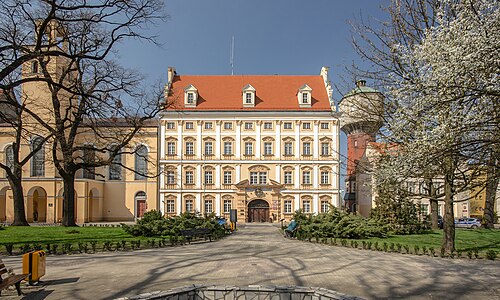
Oława is a town in southern Poland, located in the Lower Silesian Voivodeship, approximately 20 kilometers east of Wrocław. As of the latest census, Oława has a population of around 30,000 residents, making it a modestly sized urban center that combines historical elements with a growing modern community. The town is situated at the confluence of the Oława River and the Odra River, providing not only picturesque landscapes but also historical significance as a site for various economic activities throughout its history. Originally a Slavic settlement, Oława was granted town rights in the early 13th century and has seen numerous transformations under different rulers, including Polish, Czech, and German influences.
Throughout the centuries, Oława has retained various cultural and architectural landmarks that reflect its rich history. The most notable is the Church of Saint Peter and Saint Paul, a Gothic structure dating back to the 14th century, which serves as a testament to the town's medieval significance. The town's historic market square, with its charming buildings and vibrant atmosphere, acts as a central hub for community activities and events. In modern times, Oława has developed into a growing industrial and economic center, with a focus on manufacturing, logistics, and services. Its proximity to Wrocław and established transportation links, including rail and road networks, have facilitated this growth, making Oława an attractive location for new businesses and commuters alike. The combination of historical richness and contemporary development makes Oława a unique and interesting place in Poland's landscape.
Facts about Oława
- Oława is known for its historical significance dating back to the medieval period, with its roots tracing back to the 13th century.
- The city was granted town rights in 1293, making it one of the oldest towns in the Lower Silesia region of Poland.
- Oława features a unique double-nave Gothic church, the Church of St. Pierre and St. Paul, which is a prominent landmark in the city.
- Oława's location by the Odra River has historically made it an important center for trade and transport in Lower Silesia.
- The city celebrates its annual Oława River Festival, which showcases local culture, cuisine, and water sports, distinguishing it from other Polish towns.
- In the 19th century, Oława became a pioneering center for the production of textiles, particularly during the industrial revolution in Poland.
- The city is known for the preservation of its medieval city walls, which are one of the few remaining examples in the region.
- Oława has a diverse population with a rich blend of cultural influences, largely due to its history of territorial shifts and migrations.
- The Oława District has several natural reserves and parks, offering unique opportunities for outdoor activities, setting it apart from more urbanized cities.
- Oława is home to the only operational historical steam locomotive in the region, which operates on a preserved track, drawing enthusiasts from across Poland.