Olkusz, Poland
- 37,744 people
- 8 places to visit
- 50.2813, 19.5657
Places to Visit (8)
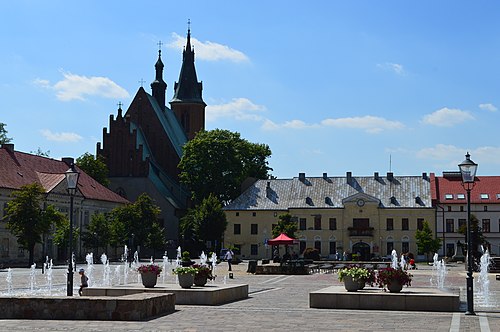
Olkusz is a historic town located in southern Poland, nestled within the Silesian Voivodeship. With a population of approximately 36,000 residents, it serves as a prominent urban center in the region. The town has roots dating back to the Middle Ages, first mentioned in historical documents in 1299. Throughout the centuries, Olkusz flourished as an important mining hub, particularly known for its rich deposits of silver and lead. The prosperity from these resources significantly contributed to the town's development and attracted settlers, merchants, as well as craftsmen. The Old Town area showcases well-preserved architecture, including Gothic and Renaissance buildings, reflecting the town's historical significance.
Culturally, Olkusz is home to several landmarks and institutions that highlight its rich heritage. One of the prominent sites is the Church of St. Andrew, a historic Gothic structure that dates back to the early 15th century, renowned for its beautiful altars and unique architecture. The town also boasts the Olkusz Museum, which houses exhibitions dedicated to the history and culture of the region, providing insight into its mining past and local traditions. Additionally, various cultural events and festivals celebrate local arts and community spirit, fostering a sense of pride among residents. In recent years, Olkusz has embraced modernization, developing infrastructure and public services while preserving its historical charm. As a gateway to the nearby Ojcowski National Park, the town attracts nature enthusiasts and tourists seeking outdoor recreation amidst picturesque landscapes. Overall, Olkusz represents a blend of historical significance, cultural richness, and natural beauty, making it a noteworthy destination in Poland.
Facts about Olkusz
- Olkusz is known for its rich mining history, particularly in silver and lead extraction, which dates back to the Middle Ages.
- The city's mining heritage is celebrated at the Olkusz Mining Museum, showcasing the region's significant role in mining during the 13th to 19th centuries.
- Olkusz is home to the St. Andrew's Church, a unique Gothic monument built in the 14th century, recognized for its distinct architecture.
- The annual Olkusz Art and Culture Festival highlights local artists and promotes various cultural events, setting it apart as a vibrant cultural hub.
- Olkusz was granted town rights in 1257, making it one of the older towns in Poland, contributing to its historical depth.
- The town is located near the Olkusz-Zegrze Nature Reserve, an area known for its beautiful landscapes and biodiversity, attracting nature enthusiasts.
- Olkusz served as a vital location on historical trade routes, particularly during the trade of silver and lead, connecting it to larger markets.
- The town's historical architecture, including the Market Square and Town Hall, reflects a blend of Gothic and Renaissance styles, differentiating it from other towns.
- Olkusz has a rich Jewish history and was once home to a vibrant Jewish community, with remnants of this heritage still visible today.
- The town is geopolitically unique, positioned at the intersection of several historical territories, including Silesia and Lesser Poland, affecting its cultural influences.