Opole, Poland
- 127,676 people
- 16 places to visit
- 50.6683, 17.9231
Places to Visit (16)
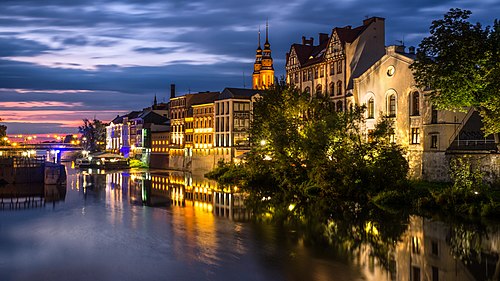
Opole, a city in southern Poland, is the capital of the Opole Voivodeship and lies along the Odra River. With a population of approximately 128,000 inhabitants, it is one of the country's smaller regional capitals but holds significant cultural and historical importance. Founded in the early medieval period, Opole's history is rich and complex, having been influenced by various states, from the Silesian Piasts to the Prussian and Austrian Empires, before ultimately becoming part of modern Poland after World War II. The city features a blend of Gothic, Renaissance, and Baroque architecture, with notable landmarks including the Opole Cathedral, which stands as a prominent example of the region's ecclesiastical heritage.
The city's cultural scene is vibrant, being particularly known for its festivals and artistic events. The Opole Song Festival, established in 1963, celebrates Polish music and attracts participants and visitors from across the nation, solidifying Opole's reputation as the "capital of Polish song." Additionally, the city is home to several educational institutions, including the Opole University, known for its diverse academic programs and international collaboration. Opole also boasts numerous parks, museums, and recreational areas, such as the Millennium Park and the Museum of Opole Silesia, which showcase the city’s history and development. The city is well-connected by road and rail, making it an important transportation hub within Poland, while its rich cultural fabric, historical significance, and scenic beauty continue to draw visitors and residents alike.
Facts about Opole
- Opole is known as the 'Capital of Polish Song' due to its long-standing tradition of hosting the National Festival of Polish Song, which began in 1963.
- The city is home to the historic Piast Castle, which dates back to the 12th century and is one of the few surviving castles from the Piast dynasty in Poland.
- Opole's historic Old Town features a unique blend of architectural styles, including Gothic, Baroque, and Renaissance, which distinguishes it from other Polish cities.
- The Opole Voivodeship is the smallest region in Poland by area, yet it holds a rich cultural heritage, particularly in Silesian traditions.
- The city has a vibrant student population, with several universities and higher education institutions, making it an important educational center in Poland.
- Opole is known for its beautiful Millennium Bridge, which is a modern cable-stayed bridge combining functionality and contemporary design, serving as a landmark in the city.
- Opole was significantly affected by World War II and underwent substantial rebuilding and redesign, which reflects a unique historical narrative compared to other Polish cities.
- The Opole region is famous for its wine production, particularly white wines, due to its favorable climate and geographic conditions for vineyards.
- The city celebrates the traditional 'Opole Silesian Carnival', a unique cultural event showcasing local music, dance, and cuisine, distinct from other regional carnivals in Poland.
- Opole has been a key center for Polish folklore and culture, hosting various artistic festivals and events throughout the year, attracting both local and international visitors.