Oranienburg, Germany
- 40,793 people
- 9 places to visit
- 52.7557, 13.2409
Places to Visit (9)
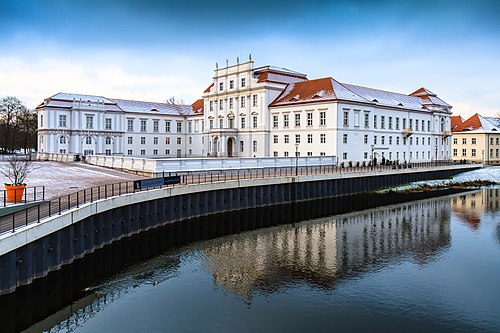
Oranienburg is a town in the state of Brandenburg, Germany, located approximately 35 kilometers (22 miles) north of Berlin. With a population of around 44,000 residents, it serves as an important center for both industrial and residential life in the region. The town's history dates back to the 13th century when it was first mentioned in historical records. The name "Oranienburg" translates to "Orange Castle," which references the princely house of Orange-Nassau. Over the centuries, Oranienburg has developed from a small settlement to a significant urban area, shaped by its strategic position along the Havel River.
One of the most notable landmarks of Oranienburg is the Sachsenhausen Concentration Camp, which was established in 1936 by the Nazi regime and later expanded to serve as a site for forced labor and imprisonment during World War II. Today, the camp serves as a poignant memorial and museum dedicated to the victims of the Holocaust, attracting visitors interested in learning about this dark chapter of history. Additionally, the town features several other historical sites, including the Oranienburg Palace, a Baroque palace completed in the 18th century, which now houses various cultural institutions and events. The town is characterized by a mix of historical architecture and modern developments, with green spaces and parks contributing to its quality of life.
Oranienburg's economy has shifted over the years, transitioning from its historical roots in brick manufacturing and agriculture to a more diverse industrial base, including logistics and technology sectors. The town benefits from its proximity to Berlin, making it a popular location for commuters who work in the capital while enjoying the relatively quieter suburban lifestyle. Oranienburg is well-connected by public transport, including an efficient train service that facilitates easy access to both Berlin and other nearby cities. With its historical significance, cultural offerings, and strategic location, Oranienburg continues to evolve as a vibrant community within Brandenburg.
Facts about Oranienburg
- Oranienburg is notable for being home to the Sachsenhausen concentration camp, which serves as a significant memorial and museum reflecting on the Holocaust and the history of totalitarianism in Germany.
- The city's name is derived from the House of Orange, a royal dynasty, and it was named in honor of Prince Maurits of Orange-Nassau during the 17th century.
- Oranienburg has a rich architectural heritage, including the impressive Baroque-style Oranienburg Palace, which was built in the 17th century and is surrounded by beautiful gardens.
- This city is recognized for hosting the annual Long Night of the Museums, where various cultural institutions open their doors at night, allowing visitors to explore art, history, and science.
- Oranienburg holds the distinction of being one of the oldest towns in Brandenburg, officially founded in 1335, with a history that stretches back to the Middle Ages.
- The Spree River runs through Oranienburg, providing picturesque waterfronts and recreational opportunities that distinguish it from many other inland cities in Germany.
- Oranienburg has a thriving arts and culture scene, prominently featuring the Lower Brandenburg State Philharmonic Orchestra, which contributes to the city's vibrant cultural landscape.
- The Knife and Sword Museum in Oranienburg is unique in its focus on the history of bladed weapons, showcasing an extensive collection that attracts enthusiasts and historians alike.
- As part of the Berlin metropolitan area, Oranienburg benefits from both urban amenities and scenic landscapes, making it an attractive location for commuters and tourists.
- The city's annual Oranienburg Old Town Festival celebrates local heritage and community spirit, featuring traditional crafts, food, and music, drawing participants from across the region.