Orléans, France
- 116,269 people
- 18 places to visit
- 47.9032, 1.9085
Places to Visit (18)
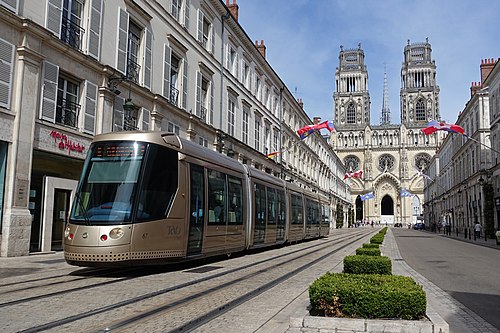
Orléans is a historic city located in north-central France, serving as the capital of the Loiret department in the Centre-Val de Loire region. Situated on the banks of the Loire River, Orléans has been a significant urban center for centuries, known for its rich history, culture, and strategic importance. The city's history dates back to Roman times when it was known as Aurelianorum, named after the Emperor Aurelian. Orléans became a prominent trading hub and was fortified during the late Middle Ages. The city gained international renown due to its association with the legendary figure of Joan of Arc, who played a crucial role in lifting the siege of Orléans in 1429 during the Hundred Years' War. This event marked a turning point in the conflict and solidified Joan's legacy as a national heroine.
The architectural landscape of Orléans reflects its historical significance, with numerous churches, monuments, and buildings that celebrate both its medieval and Renaissance heritage. The Cathédrale Sainte-Croix, a striking Gothic cathedral, stands as a centerpiece of the city, with its elegant spires and stunning stained glass. In addition to its religious architecture, Orléans features charming streets, squares, and the picturesque banks of the Loire, which have been designated a UNESCO World Heritage site due to their historical value. The city also embraces contemporary culture, boasting various museums, theaters, and annual events, such as the Festival of Joan of Arc, which commemorates the city's famous heroine.
Orléans is also notable for its educational institutions and institutions, including the University of Orléans, which was established in the 16th century and continues to contribute to the academic and cultural life of the city. The city serves as a vibrant center for arts and cuisine, with local markets and restaurants that celebrate the rich gastronomic heritage of the region. In terms of transportation, Orléans is well-connected to other major cities in France via rail and road, making it a convenient destination for tourists and a strategic base for exploring the surrounding Loire Valley, known for its châteaux and vineyards. Overall, Orléans combines a blend of historical significance, rich cultural life, and contemporary vibrancy, making it an appealing destination for visitors and a cherished home for its residents.
Facts about Orléans
- Orléans is famous for its association with Joan of Arc, who played a crucial role in lifting the Siege of Orléans in 1429 during the Hundred Years' War.
- The city holds an annual festival called 'Joan of Arc Festival' in May to commemorate her contributions, featuring parades and reenactments.
- Orléans is located on the banks of the Loire River and is considered the capital of the Loiret department, as well as part of the Centre-Val de Loire region.
- The historic downtown area of Orléans features a unique blend of Gothic architecture exemplified by the majestic Sainte-Croix Cathedral, which took centuries to complete.
- The city is known for its rich gastronomy, including specialties like the Orléans tart and various wines produced in the surrounding Loire Valley.
- Orléans is a pivotal transportation hub, hosting the main railway junction connecting Paris to several southwestern regions of France.
- In the early 20th century, Orléans became a center of the French art movement known as 'Art Nouveau', reflected in several buildings throughout the city.
- Orléans has a significant educational presence, home to the University of Orléans, which was founded in 1306, making it one of the oldest universities in France.
- The city's historical significance includes being a meeting point for various trade routes, contributing to its economic development over centuries.
- Orléans has a vibrant cultural scene, with institutions like the historical museum, music festivals, and theater productions that celebrate its rich heritage.