Ostuni, Italy
- 24,157 people
- 15 places to visit
- 40.7297, 17.5772
Places to Visit (15)
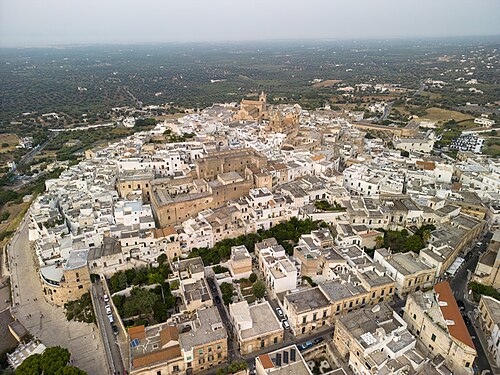
Ostuni, often referred to as the "White City" (La Città Bianca), is a picturesque town located in the Puglia region of southern Italy. Perched on a hill at an elevation of about 200 meters, it offers stunning views of the surrounding countryside and the Adriatic Sea. Its distinctive whitewashed buildings, narrow cobblestone streets, and charming architecture make Ostuni a popular destination for both tourists and locals. The town's origins can be traced back to prehistoric times, with evidence of ancient settlements in the area. Throughout its history, Ostuni has been influenced by various cultures, including the Greeks, Romans, and Normans, all of which have left their mark on the local architecture and traditions.
The heart of Ostuni is its historic center, characterized by winding alleys, staircases, and arches. The Cathedral of Santa Maria Assunta, built in the 15th century, stands out with its striking Romanesque-Gothic façade and beautifully crafted rose window. In addition to the cathedral, visitors can explore numerous churches, such as the Church of San Francesco, and the remains of a medieval fortress. The annual festival of the "Festa dei Santi" in early November celebrates the town's patron saints and showcases traditional music, food, and local crafts, drawing in visitors eager to experience the vibrant culture of the area. Culinary offerings in Ostuni highlight the region's rich agricultural heritage, with olive oil, fresh vegetables, and local wines taking center stage in many traditional dishes.
Ostuni is also known for its advantageous location, making it an ideal base for exploring the wider Puglia region, which includes the stunning beaches of the Adriatic Coast, ancient archaeological sites, and the unique trulli houses of Alberobello. The nearby Valle d'Itria, famous for its rolling hills and limestone cliffs, adds to the area’s natural beauty and charm. With its blend of history, culture, and stunning landscapes, Ostuni captures the essence of southern Italy, offering visitors a glimpse into its rich past while embracing the warmth and hospitality of its people.
Facts about Ostuni
- Ostuni is often referred to as the 'White City' due to its stunning whitewashed buildings that create a striking contrast against the blue sky and surrounding countryside.
- The city's historic center is characterized by narrow winding streets, making it one of the best-preserved medieval towns in Italy.
- Ostuni boasts a unique combination of Gothic, Romanesque, and Baroque architecture, with the Cathedral of Ostuni as a prominent example of this blend.
- The city's strategic hilltop location offers breathtaking panoramic views of the Adriatic Sea and the lush olive groves that surround it.
- Ostuni's olive oil is renowned, and the region is home to some of the oldest olive trees in the world, with some estimated to be over 1,000 years old.
- Every year, Ostuni hosts a traditional event called 'La Notte della Taranta,' celebrating the region's music and dance, particularly the Pizzica, a folk dance.
- The city is surrounded by the beautiful Regional Natural Park of Coastal Dunes, which features stunning beaches and diverse flora and fauna.
- Ostuni has a rich agricultural heritage and is particularly famous for its white fig variety known as 'Fico Bianco D'India,' celebrated for its sweet flavor.
- In addition to its historical significance, Ostuni has emerged as a modern tourist destination with luxury accommodations, restaurants, and a thriving local market.
- The archaeological site of 'Egnazia,' located nearby, offers insights into the region's ancient history, including ruins from the Roman and pre-Roman periods.