Oświęcim, Poland
- 39,057 people
- 15 places to visit
- 50.0344, 19.2098
Places to Visit (15)
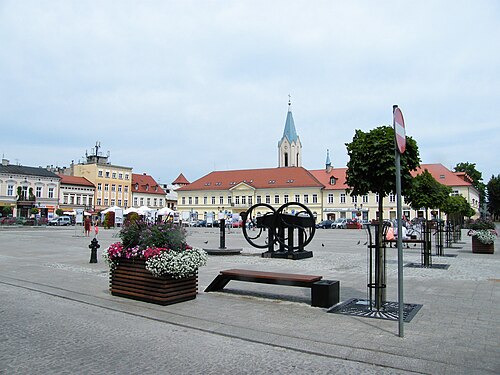
Oświęcim, a town in southern Poland, is located in the Silesian Voivodeship and sits at the confluence of the Soła and Wisła rivers. With a population of approximately 39,000 residents, it covers an area of around 50 square kilometers. The town's history dates back to the 12th century when it was first mentioned in historical records. Oświęcim developed into a significant administrative and commercial center over the centuries, particularly during the Middle Ages. Its strategic location made it an important hub for trade and military maneuvers, especially in the context of various regional conflicts.
However, Oświęcim is most widely known for its tragic association with World War II. The town was the site of the infamous Auschwitz concentration and extermination camp, established by Nazi Germany in 1940. Known as Auschwitz-Birkenau, this camp became a symbol of the Holocaust, where approximately 1.1 million people, primarily Jews, were murdered. Today, the Auschwitz-Birkenau State Museum serves as a memorial and educational center, attracting millions of visitors annually who seek to honor the victims and learn about the atrocities committed during the war. Despite its somber past, Oświęcim also boasts a rich cultural heritage, with numerous historical buildings, parks, and museums that reflect its diverse history. The town continues to remember and educate about its past while fostering community life and development in the present.
Facts about Oświęcim
- Oświęcim is internationally known as the location of the Auschwitz-Birkenau concentration and extermination camp, which is a UNESCO World Heritage site and serves as a memorial and educational site for the Holocaust.
- The town has a history that dates back over a thousand years, with its first mention occurring in 1194, making it one of the older settlements in Poland.
- Oświęcim was awarded the title of a Cittaslow member in recognition of its efforts to enhance the quality of life and promote sustainable development.
- The Oświęcim Castle, originally built in the 14th century, is a significant historical structure that reflects the architectural evolution over centuries.
- Unlike many Polish cities, Oświęcim hosts the annual 'Auschwitz-Birkenau: The Memory of the World' conference aimed at preserving the memory and lessons of the Holocaust.
- The city has a multi-cultural heritage, with a history of Polish, Jewish, and German communities living together, particularly before World War II.
- Oświęcim has developed a variety of educational programs and initiatives aimed at fostering dialogue about tolerance, human rights, and the consequences of discrimination.
- The nearby Vistula River adds a natural beauty to the city, providing recreational opportunities and contributing to Oświęcim's picturesque setting.
- Oświęcim is known for its local crafts, particularly pottery and artisan works, which have been passed down through generations.
- The town serves as a center for various music and cultural events, promoting the arts as a way to bridge past tragedies with a hopeful future.