Otwock, Poland
- 43,388 people
- 7 places to visit
- 52.1053, 21.2616
Places to Visit (7)
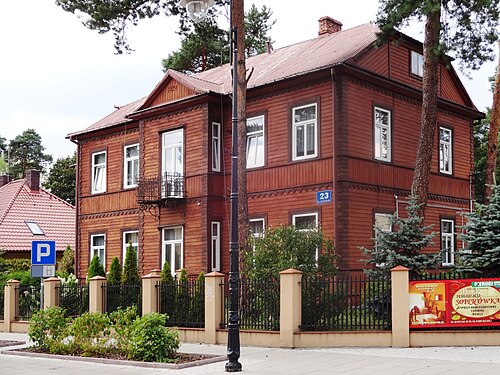
Otwock is a picturesque city located in the Masovian Voivodeship of Poland, approximately 25 kilometers southeast of Warsaw. It is situated at the confluence of the Vistula River and the Otwock River, surrounded by lush woodlands that form part of the Nałeczów Forest and the Otwock Forest. With a population of around 30,000 residents, Otwock has developed from a small village into a significant urban center, particularly noted for its health resorts that gained popularity in the late 19th century. The city's favorable microclimate and natural surroundings drew many patients seeking treatment for tuberculosis and other respiratory ailments, establishing Otwock as a spa destination.
Architecturally, Otwock is renowned for its unique development of wooden architecture, particularly in the style of the so-called "Otwock villas." These structures, built predominantly in the early 20th century, often feature elaborate wooden details and integrate harmoniously with the surrounding nature. The city's historical relevance is bolstered by its Jewish heritage, with a significant Jewish community before World War II. Sadly, during the Holocaust, many of the city's Jewish residents were murdered, and this tragic history is an important aspect of Otwock's identity. Modern Otwock balances its historical legacy with contemporary amenities, including parks, cultural institutions, and schools, and offers an array of recreational activities for residents and visitors alike.
Economically, Otwock is transitioning from a predominantly health-oriented economy towards a more diverse one, with local industries, commerce, and tourism playing increasingly important roles. Its proximity to Warsaw enhances its appeal as a suburban living destination, attracting individuals and families seeking a quieter lifestyle while still having access to urban amenities. The city is well-connected through a network of roads and railways, facilitating easy commuting to and from the capital. Otwock continues to grow as a sought-after locale, known for its beautiful natural surroundings, vibrant history, and a strong sense of community.
Facts about Otwock
- Otwock is known for its unique wooden architecture, particularly the 'Otwock style' of wooden houses built in the early 20th century.
- The city is famous for its health resorts, which were established in the late 19th century, attracting visitors seeking treatment for tuberculosis and other ailments.
- Otwock is located near the scenic Kampinos National Park, providing residents and visitors with easy access to a vast natural reserve of forests and wildlife.
- The town is recognized as a center for Polish Jewish history, once having a vibrant Jewish community before World War II.
- Otwock has a well-preserved historic railway station, which dates back to the 19th century and is an important part of the city's transport heritage.
- The city hosts the annual Otwock Culture Festival, highlighting local arts, crafts, and performances, promoting community engagement and cultural heritage.
- Otwock is often referred to as 'the Polish spa town' due to its natural springs and therapeutic facilities that capitalize on its health-giving resources.
- The nearby Vistula River offers recreational opportunities such as kayaking and cycling along its picturesque banks, making Otwock a popular spot for outdoor activities.
- Otwock has a reputation for its diverse ecosystems, supported by its proximity to both the Vistula River and surrounding forest areas, making it a hotspot for birdwatching.
- The city played a role in the early development of Polish railway networks, contributing to the expansion of transportation in the region during the 19th century.