Ouagadougou, Burkina Faso
- 2,415,266 people
- 10 places to visit
- 12.3714, -1.5197
Places to Visit (10)
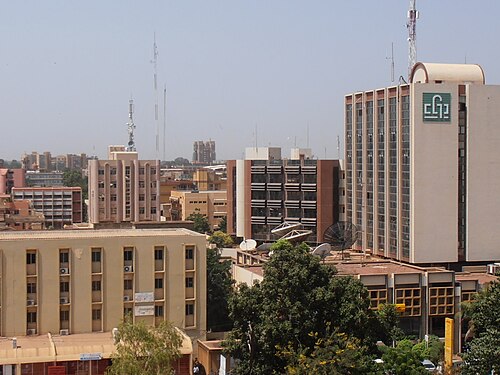
Ouagadougou is the capital and largest city of Burkina Faso, a landlocked country in West Africa. Known colloquially as "Ouaga," the city serves as the political, cultural, and economic heart of the nation. Situated in the central part of Burkina Faso, it has a population of over 2 million people, making it one of the most populous cities in the region. The city's name is derived from the Mossi language, with "Ouaga" meaning "home" or "place," and "dougou" referring to "the place of the man." Its historical significance stems from its founding by the Mossi people in the 15th century, and since then, it has grown into a vibrant urban center influenced by various ethnic groups and cultures.
Ouagadougou is characterized by its blend of traditional and modern elements, with bustling markets, vibrant festivals, and a growing infrastructure. The city is renowned for its rich cultural scene, showcasing music, art, and crafts. The annual International Art and Craft Fair (SIAO) draws artisans and visitors from across the continent and beyond, highlighting Burkina Faso's commitment to preserving its artistic heritage. In addition to its cultural offerings, Ouagadougou plays a crucial role in Burkina Faso's economy, with industries ranging from textiles to agriculture. Key landmarks include the National Museum of Burkina Faso, which exhibits the country’s history and heritage, and the monumental Cathedral of Ouagadougou, a significant symbol of the city’s colonial past.
Despite its vibrancy and potential, Ouagadougou faces challenges such as rapid urbanization, infrastructure deficits, and political instability. The city has experienced intermittent conflicts and unrest, particularly in recent years, which have impacted its development and safety. Nonetheless, Ouagadougou remains a focal point for regional initiatives aimed at promoting peace and economic stability in West Africa. The city is also home to several educational institutions, including the University of Ouagadougou, which contributes to the nation’s intellectual and professional landscape. As Burkina Faso navigates its socio-political landscape, Ouagadougou continues to be a symbol of resilience and hope for its inhabitants and the broader region.
Facts about Ouagadougou
- Ouagadougou is the capital and largest city of Burkina Faso, serving as the political and administrative heart of the country.
- The city is known for its vibrant cultural scene, including the biennial Panafrican Film and Television Festival of Ouagadougou (FESPACO), which is one of the most significant film festivals in Africa.
- Ouagadougou is home to the National Museum of Burkina Faso, which showcases the country's rich cultural heritage, including art, artifacts, and traditional crafts.
- The city has a notable landmark, the Moro Naaba's Palace, which is the residence of the traditional chief and reflects the history and customs of the Mossi people.
- Ouagadougou features a unique market called the Grand Marché, where visitors can find local crafts, textiles, and foods, making it a bustling hub of commerce and culture.
- The city is a center for education in Burkina Faso, housing important institutions such as the University of Ouagadougou, which attracts students from across West Africa.
- Ouagadougou has a significant Muslim community and boasts impressive mosques, including the Central Mosque of Ouagadougou, which is known for its distinctive architectural style.
- The city played a crucial role during Burkina Faso's fight for independence, serving as a focal point for national movements against colonial rule.
- Ouagadougou is also known for its eco-conscious initiatives, including the promotion of urban gardening and sustainable practices in response to climate challenges.
- The city is nicknamed 'Ouaga' and is characterized by a warm, friendly atmosphere, reflecting the hospitality of its inhabitants.