Oviedo, Spain
- 220,020 people
- 18 places to visit
- 43.3622, -5.8485
Places to Visit (18)
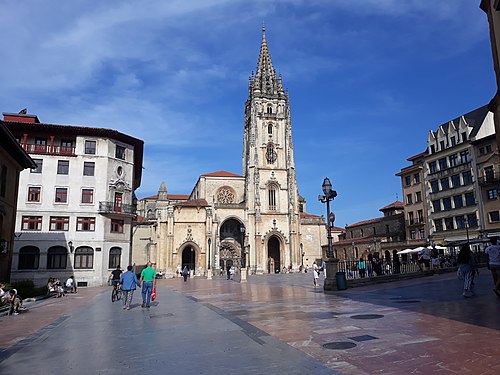
Oviedo is the capital of the Principality of Asturias, located in northern Spain. Known for its rich history, vibrant culture, and scenic landscapes, the city has an elevation of approximately 200 meters above sea level and is surrounded by mountains, making it a picturesque destination. Founded in the 8th century, Oviedo has played a significant role throughout Spanish history, especially during the Reconquista, the period when Christian kingdoms sought to reclaim the Iberian Peninsula from Muslim rule. The city maintains numerous historical sites, including the UNESCO World Heritage-listed Cathedral of San Salvador, which showcases stunning Gothic architecture and houses an impressive collection of religious artifacts.
The urban layout of Oviedo features a harmonious blend of medieval and modern architecture. The city's old town, or "casco antiguo," is characterized by narrow streets, charming squares, and numerous pre-Romanesque churches, such as Santa María del Naranco and San Miguel de Lillo, which reflect the region's architectural heritage. In addition to its historical allure, Oviedo is known for its vibrant cultural scene, hosting various festivals, concerts, and cultural events throughout the year. The city is also home to a thriving gastronomic scene, offering typical Asturian dishes such as “cachopo,” a breaded meat dish, and “fabada asturiana,” a hearty bean stew. A focal point for local pride is the annual cider festival, celebrating the region's renowned cider, “sidra,” which is produced in traditional ways.
Oviedo boasts a population of approximately 220,000 residents and is well-connected by public transport, including rail systems that link it to other major cities in Spain. The city is also a center for education and healthcare in the region, housing several universities and medical institutions. With its alluring blend of historical significance, cultural vibrancy, and natural beauty, Oviedo stands out as a captivating destination for both tourists and those interested in experiencing authentic Spanish life.
Facts about Oviedo
- Oviedo is renowned for its Asturian pre-Romanesque architecture, particularly the churches of Santa Maria del Naranco and San Miguel de Lillo, which are UNESCO World Heritage Sites.
- The city is famous for being the birthplace of the Asturian language and its rich cultural heritage, including literature, music, and traditional folklore unique to the Asturias region.
- Oviedo hosts the prestigious annual Prince of Asturias Awards, which recognize achievements in various fields such as arts, literature, and science, attracting international attention.
- The city's historic center features a unique blend of Gothic, Baroque, and modern architecture, best exemplified by the impressive Cathedral of San Salvador, which showcases elements from different architectural styles over centuries.
- Oviedo has a rich tradition of cider-making, and it is the capital of cider in Spain, with numerous cider houses (llagares) offering local varieties of Asturian cider known as 'sidra'.
- The city is home to the beautiful Parque de San Francisco, a public park that boasts a range of species of trees, plants, and picturesque walking paths, making it a serene retreat in the city.
- Oviedo is recognized for its vibrant gastronomic scene, particularly its traditional dishes like 'fabada asturiana' (bean stew) and 'cachopo' (breaded beef filled with cheese and ham), reflecting the local culinary culture.
- The city plays a central role in the 'Camino de Santiago' pilgrimage route, adding to its historical significance as a cultural and spiritual destination in northern Spain.
- Oviedo's local festival, the 'Fiestas de San Mateo', celebrated in September, features parades, music, and traditional Asturian dances, showcasing the city’s vibrant community spirit.
- The city is known for the 'Museo de Bellas Artes de Asturias', which houses an extensive collection of Spanish art ranging from the medieval period to contemporary works, highlighting its cultural richness.