Oxford, United Kingdom
- 162,100 people
- 17 places to visit
- 51.752, -1.2577
Places to Visit (17)
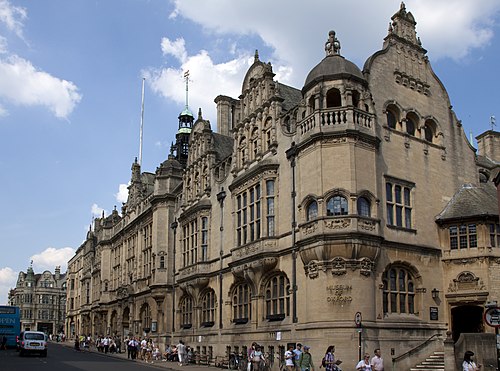
Oxford, located in Oxfordshire, England, is a historic city renowned for its prestigious university, the University of Oxford, which is the oldest in the English-speaking world. Founded in the 12th century, the university has played a pivotal role in the intellectual and political spheres of England and beyond. The city is home to 38 colleges, each with its own unique traditions and architectural styles, contributing to the picturesque landscape characterized by medieval and gothic buildings. The city’s development has been heavily influenced by its university, making it a vibrant center for education, culture, and research.
In addition to its academic prowess, Oxford boasts a rich cultural heritage. The city features numerous museums, including the Ashmolean Museum, which is the oldest public museum in the UK and houses a vast collection of art and archaeology. The Bodleian Library, one of the oldest libraries in Europe, is another highlight, holding over 13 million printed items. Oxford’s history is also evidenced by its various historic landmarks such as the Radcliffe Camera, Christ Church Cathedral, and the Covered Market, which date back several centuries and attract tourists and locals alike. With a population of around 150,000, the city offers a blend of a bustling urban environment and serene green spaces, including the University Parks and the River Isis.
Oxford is also well-known for its influence on literature, having produced several notable authors, including J.R.R. Tolkien, C.S. Lewis, and Philip Pullman. The city hosts numerous festivals and events throughout the year, such as the Oxford Literary Festival and the Oxford Jazz Festival, which celebrate its artistic community. Additionally, Oxford’s economy is not solely reliant on education; it benefits from sectors such as publishing, technology, and tourism, making it a dynamic and well-rounded city. With its blend of historic charm and modern vibrancy, Oxford remains a significant cultural and educational hub in the United Kingdom.
Facts about Oxford
- Oxford is home to the oldest university in the English-speaking world, the University of Oxford, which dates back to the 12th century.
- The city’s iconic skyline is dominated by a mix of medieval and modern architecture, with notable structures like the Radcliffe Camera and the Bodleian Library.
- Oxford is known as the 'city of dreaming spires,' a phrase coined by poet Matthew Arnold to describe the beauty of its historic architecture.
- The Ashmolean Museum in Oxford is the oldest public museum in the UK, founded in 1683, and houses an extensive collection of art and antiquities.
- In 1946, Oxford was the birthplace of the first modern computer at the University of Oxford, which later evolved into the development of the 'Oxford Calculator.'
- The city has a rich literary history and has been featured in the works of authors such as J.R.R. Tolkien, C.S. Lewis, and Lewis Carroll.
- Oxford hosts the annual Oxford-Cambridge Boat Race, a prestigious rowing competition that has taken place since 1829.
- The famous 'dreaming spires' landscape has earned Oxford UNESCO World Heritage status, preserving its historical significance and beauty.
- Oxford has more than 1,500 buildings of historic interest, making it one of the most architecturally rich cities in the UK.
- The city is recognized for its significant contributions to science, including multiple Nobel laureates affiliated with the University of Oxford, particularly in medicine and chemistry.