Padova, Italy
- 203,725 people
- 13 places to visit
- 45.4105, 11.8782
Places to Visit (13)
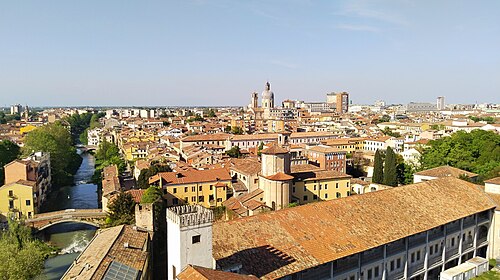
Padova, located in the Veneto region of northern Italy, is a city rich in history, art, and culture. It is situated approximately 40 kilometers west of Venice and has been a significant center of learning and commerce since ancient times. Founded in 1183 BC, Padova claims to be one of the oldest cities in Italy, with a wealth of Roman and medieval architecture. The city's historic center features numerous landmarks, including the beautiful Prato della Valle, one of the largest squares in Europe, adorned with statues of prominent local figures. The Basilica of Saint Anthony, a pilgrimage destination, showcases a striking blend of Gothic and Byzantine architecture and holds the tomb of the revered saint.
Padova is also renowned for its prestigious university, founded in 1222, which has produced notable scholars, including Galileo Galilei. The university's botanical garden, the Orto Botanico di Padova, is a UNESCO World Heritage site and one of the oldest in the world, emphasizing the city's long-standing commitment to education and research. Additionally, the city is home to the Scrovegni Chapel, famous for its remarkable frescoes by Giotto, which are considered masterpieces of Western art and a highlight for visitors. The vibrant cultural scene, characterized by festivals, theaters, and art exhibitions, complements Padova's rich historical legacy, making it a significant destination for tourists and scholars alike.
Facts about Padova
- Padova is home to one of the world's oldest universities, the University of Padua, founded in 1222, which has produced notable figures such as Galileo Galilei.
- The city's iconic Scrovegni Chapel features a famous cycle of frescoes painted by Giotto in the early 14th century, recognized as a masterpiece of Western art.
- Padova hosts the largest square in Italy, Prato della Valle, which is a beautiful elliptical square adorned with statues and a picturesque canal running through it.
- The Botanical Garden of Padua, established in 1545, is the world's oldest university botanical garden still in its original location, a UNESCO World Heritage site since 1997.
- The city is known for its historical and scientific culture and is referred to as the 'City of the Hospital' due to its long tradition of medicine and medical studies.
- Padova’s Caffè Pedrocchi, opened in 1831, is considered one of the most important cultural cafes in Italy, famous for its unique architecture and historical significance.
- The Basilica of Saint Anthony, dedicated to Saint Anthony of Padua, is a major pilgrimage site and showcases a mix of architectural styles, including Romanesque and Gothic.
- Padova has a rich association with art and literature, where notable figures like the poet Francesco Petrarch and composer Giovanni Battista Pergolesi were linked to the city.
- The city is known for its distinct cuisine, particularly its venetian-style dishes and local delicacies such as 'Baccalà alla Vicentina'.
- Padova's vibrant cultural scene includes several annual festivals, such as the 'Fiera di Padova', which celebrates local artisan craftsmanship and food.