Palencia, Spain
- 82,651 people
- 11 places to visit
- 42.0097, -4.5288
Places to Visit (11)
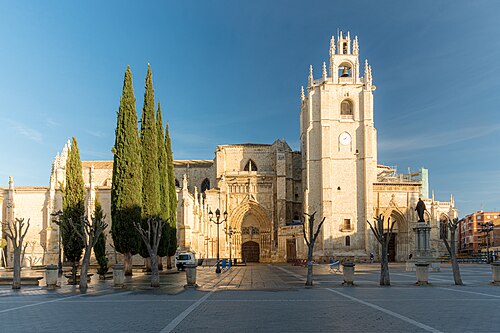
Palencia is a city located in the northwest of Spain, serving as the capital of the Province of Palencia in the autonomous community of Castile and León. With a rich history that dates back to Roman times, Palencia is known for its historical and architectural heritage. The city was founded as a Roman settlement called “Pallantia” and became an essential hub during the Middle Ages, particularly in the Christian Reconquista. Today, Palencia boasts a population of approximately 80,000 residents and combines a tranquil lifestyle with cultural vibrancy.
The city features several notable landmarks, including its impressive Gothic cathedral, known as the Cathedral of San Antolín, which was constructed between the 14th and 16th centuries. This cathedral is remarkable for its unique features, including a stunning altarpiece, intricate chapels, and a beautiful golden retable. Additionally, Palencia is home to the Church of San Miguel, a fine example of Romanesque architecture, and the historic Plaza Mayor, where local life flourishes. The city is also known for its picturesque riverside parks along the Canal de Castilla, a significant waterway designed for inland navigation that highlights the region's agricultural heritage.
Palencia also hosts various cultural events, particularly during its annual celebrations such as Holy Week, which is recognized for its solemn processions and deep-rooted traditions. The gastronomy of Palencia is typically Castilian, featuring local specialties such as “hornazo,” a savory pastry filled with meat, and “queso de oveja,” a sheep’s cheese that is popular throughout the region. The city maintains a relaxed atmosphere with a blend of urban conveniences, making it an ideal spot for both locals and visitors. With its historical significance, architectural beauty, and rich culinary offerings, Palencia stands out as a charming representation of Spain’s cultural diversity.
Facts about Palencia
- Palencia is home to the magnificent Cathedral of San Antolín, which features a stunning Gothic design and a unique blend of styles including Romanesque elements.
- The city is known for its rich history dating back to Roman times, evidenced by the ruins of the Romanesque 'Palentia', which was once a significant settlement.
- Palencia hosts the annual 'Festival de la Luz', celebrating local music and arts, making it a cultural hub in the region of Castile and León.
- The city's iconic 'Plaza Mayor' is one of the largest central squares in Spain, distinguished by its striking architecture and vibrant atmosphere.
- Palencia boasts a lesser-known culinary specialty, 'Sopa de Ajo', a traditional garlic soup that showcases the local flavors of the region.
- The city has a unique connection to the Spanish poet Antonio Machado, who lived there for part of his life, and his residence is now a museum dedicated to his work.
- Palencia is recognized for its impressive collection of Romanesque churches, with over 20 well-preserved examples in its surroundings, a rarity in Spain.
- The city is celebrated for its extensive park, the 'Parque de la Huerta de Guadián', which features gardens, playgrounds, and walking trails along the Carrión River.
- Palencia played a crucial role in the development of the Spanish language; the city's university, founded in the 13th century, is one of the oldest in Spain.
- The local tradition of 'Las Edades del Hombre', an art exhibition that combines religious art with cultural events, prominently takes place in Palencia, attracting visitors from all over.