Palenque, Mexico
- 42,947 people
- 9 places to visit
- 17.511, -91.9931
Places to Visit (9)
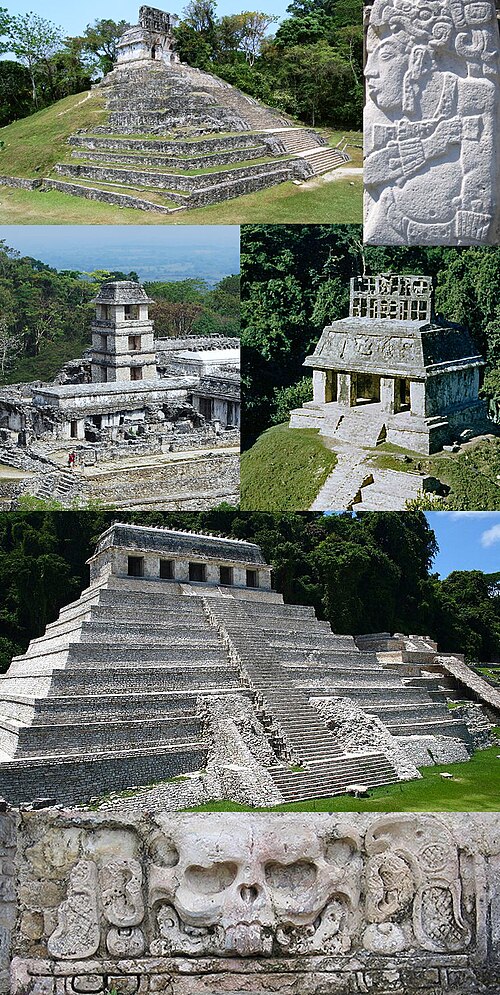
Palenque is a historic city located in the southern Mexican state of Chiapas, known primarily for its Mayan archaeological significance and lush tropical surroundings. Positioned within the boundaries of the Palenque National Park, this ancient city flourished during the Late Classic period of Mesoamerican history, approximately between the 7th and 9th centuries CE. The ruins of Palenque are among the most notable in Mexico, showcasing remarkable achievements in art, architecture, and advanced urban planning. The site features several impressive structures, including the Temple of the Inscriptions, which houses the tomb of the Mayan ruler Pakal the Great and is famed for its intricate carvings and hieroglyphics.
Palenque was not only a center for politics and economics but also served as a hub for religious and cultural activities. The city's architecture reflects a combination of art, astronomy, and spirituality, with temples and palaces intricately designed to align with celestial events. The Mayans who inhabited Palenque were skilled mathematicians and astronomers, and they created a complex calendar system that reflects their understanding of time and the universe. The city's decline began around the 9th century, likely due to a combination of environmental factors, warfare, and socio-political changes, resulting in its eventual abandonment.
Today, Palenque is a UNESCO World Heritage Site and draws thousands of visitors every year, eager to explore its archaeological treasures and natural beauty. The surrounding rainforest provides a biodiverse habitat, where visitors can encounter a variety of wildlife, including howler monkeys and abundant bird species. The area around Palenque has become a popular destination not only for its historical significance but also for eco-tourism and cultural experiences. Local communities maintain traditions that reflect their Mayan heritage, offering visitors insights into the living culture that traces its roots back to the ancient civilization that once thrived in this region.
Facts about Palenque
- Palenque is home to one of the most significant Maya archaeological sites, featuring well-preserved ruins that date back to 226 BC.
- The Palace of Palenque is notable for its unique architectural features, including corbel arches and an expansive layout, which sets it apart from other Mayan sites.
- Palenque was designated a UNESCO World Heritage Site in 1987, recognized for its cultural significance and stunning natural setting.
- The city is famous for its intricate stone carvings and inscriptions, particularly in the Temple of the Inscriptions, which houses the tomb of the Mayan ruler Pakal the Great.
- Palenque served as a major political and economic center for the Maya civilization during the Classic period, having a significant influence on later Mayan cities.
- The ruins of Palenque are surrounded by lush tropical rainforest, offering a unique biodiversity that is different from many other archaeological sites in Mexico.
- Palenque is also known for the famous 'Palenque Plaque', which is an early form of written Maya language that demonstrates the sophistication of Mayan script.
- The annual 'Festival de la Cultura Maya' held in Palenque celebrates Mayan heritage, with music, dance, and art, highlighting its rich cultural identity.
- Palenque's archaeological sites often feature elaborate water management systems, including canals and aqueducts, showcasing advanced engineering for its time.
- The surrounding Chiapas region is known for its indigenous culture, providing a living connection to the past and a contrast to the more urbanized areas of Mexico.