Paramaribo, Suriname
- 223,757 people
- 12 places to visit
- 5.852, -55.2038
Places to Visit (12)
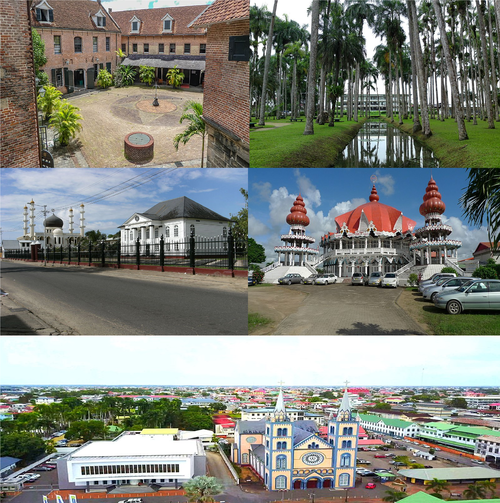
Paramaribo is the capital and largest city of Suriname, a small country located on the northeastern coast of South America. Founded in 1613 by the Dutch, Paramaribo serves as the political, economic, and cultural heart of Suriname. The city is situated on the banks of the Suriname River, approximately 15 kilometers from the Atlantic Ocean. With a population of around 250,000 people, it is home to a diverse mix of ethnic groups, including Creole, Hindustani, Javanese, and indigenous peoples, reflecting Suriname's rich colonial history and cultural heritage.
The architecture of Paramaribo is notable for its blend of colonial Dutch influences and local styles. The city center is recognized as a UNESCO World Heritage Site, featuring well-preserved wooden structures that date back to the 18th and 19th centuries. Among the prominent landmarks are the Saint Peter and Paul Cathedral, the largest wooden structure in the Western Hemisphere, and the Presidential Palace, which showcases the city’s colonial past. Paramaribo also boasts vibrant markets, such as the Central Market, where locals and visitors can find a variety of spices, fresh produce, and handmade crafts, highlighting the country’s agricultural diversity.
Culturally, Paramaribo is a focal point for arts and traditions, with numerous festivals and events celebrating its multicultural society. Celebrations such as the Javanese Festival, the Hindustani Holi, and various Creole and indigenous events demonstrate the city’s dynamic cultural landscape. The city is also known for its lush green spaces and riverside promenades, which offer recreational opportunities for both residents and tourists. Furthermore, Paramaribo is becoming increasingly popular as a tourist destination, attracting visitors with its history, culture, and natural surroundings, making it a unique gateway to the heart of Suriname.
Facts about Paramaribo
- Paramaribo is the capital and largest city of Suriname, serving as the political and economic center of the country.
- The historic inner city of Paramaribo is a UNESCO World Heritage Site, recognized for its unique blend of Dutch colonial architecture and Caribbean influence.
- Paramaribo is home to the largest wooden structure in the Western Hemisphere, the Saint Peter and Paul Cathedral, which is made entirely of wood.
- The city features a diverse population, including people of East Indian, African, Javanese, and Indigenous descent, reflecting Suriname's multicultural society.
- Paramaribo hosts the annual Suriname Carnival, a vibrant celebration showcasing the rich cultural heritage of the region with colorful parades and traditional music.
- The city's Fort Zeelandia, built in the 17th century, played a significant role in the colonial history of Suriname and now houses a museum.
- Paramaribo's Central Market, known as the 'Markt', is a bustling hub where locals sell fresh produce, spices, and handmade crafts, making it one of the most popular attractions in the city.
- The city is located on the banks of the Suriname River, offering picturesque views and opportunities for water-based activities and tourism.
- Paramaribo is known for its commitment to sustainability, with several initiatives focusing on preserving its environment and promoting green spaces.
- The city has a rich nightlife, with various bars, clubs, and cultural venues, making it a lively spot for both locals and visitors.