Paris, France
- 2,138,551 people
- 17 places to visit
- 48.8575, 2.3514
Places to Visit (17)
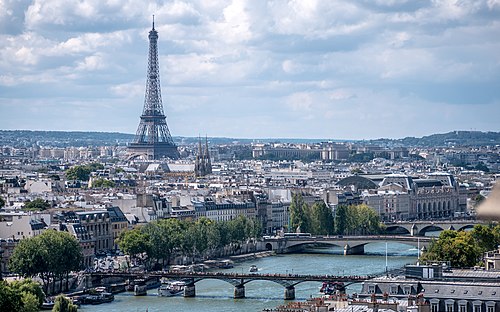
Paris, the capital city of France, is renowned for its rich history, cultural significance, and artistic heritage. Located in the north-central part of the country along the Seine River, it covers an area of approximately 105 square kilometers and has a population of about 2.1 million residents, making it one of the most populous cities in Europe. Paris has been a major center of politics, fashion, and art for centuries, serving as the seat of power for French leaders since the time of kings. The city's iconic landmarks, such as the Eiffel Tower, Notre-Dame Cathedral, and the Louvre Museum, attract millions of tourists each year, contributing significantly to its economy.
The history of Paris dates back to around the 3rd century BC when it was founded by a Celtic tribe known as the Parisii. Over the centuries, the city has witnessed numerous pivotal events, including the French Revolution, the rise of Napoleon Bonaparte, and both World Wars. Paris is famed for its contributions to literature, philosophy, and the arts, being home to influential figures such as Ernest Hemingway, Victor Hugo, and Pablo Picasso. The city is also a hub of education and research, housing prestigious institutions like the Sorbonne University. Paris is organized into 20 administrative districts, known as arrondissements, which radiate from the historical center, the Île de la Cité, where Notre-Dame is situated.
Modern Paris is recognized for its diverse neighborhoods, each offering its own unique character and charm. The Montmartre district, famous for its bohemian past, is known for the Basilica of the Sacré-Cœur and vibrant art scene. Meanwhile, Saint-Germain-des-Prés is celebrated for its historic cafés and intellectual milieu. The city is also notable for its culinary traditions, boasting an array of exquisite restaurants and patisseries, as well as its vibrant street life and nightlife. With its blend of historical significance and modern vibrancy, Paris continues to be a symbol of culture and elegance, captivating visitors from around the world.
Facts about Paris
- Paris is known as 'The City of Light' because it was one of the first cities in the world to adopt street lighting.
- The Eiffel Tower, originally a temporary installation for the 1889 Exposition Universelle, has become an enduring symbol of Paris and is visited by millions each year.
- Paris is home to the Louvre Museum, the world's largest art museum, which houses iconic works such as the Mona Lisa and the Venus de Milo.
- The Cathedral of Notre-Dame is a masterpiece of French Gothic architecture and has been an integral part of French history since its completion in the 14th century.
- Paris is the location of the famous Champs-Élysées, often referred to as 'the most beautiful avenue in the world', which stretches from the Arc de Triomphe to the Place de la Concorde.
- The city was the heart of the Enlightenment in the 18th century, shaping modern thought with philosophers like Voltaire, Rousseau, and Diderot.
- Paris hosts the annual Paris Fashion Week, a significant event in the global fashion calendar, attracting designers and fashionistas from around the world.
- The city is divided into 20 administrative districts known as arrondissements, with each having its own unique character and charm.
- Paris is home to one of the oldest metro systems in the world, which was inaugurated in 1900 and now has 16 lines and over 300 stations.
- The annual Bastille Day celebration on July 14 commemorates the French Revolution and is marked by fireworks, parades, and parties across the city.