Pātan, India
- 117,863 people
- 7 places to visit
- 23.85, 72.121
Places to Visit (7)
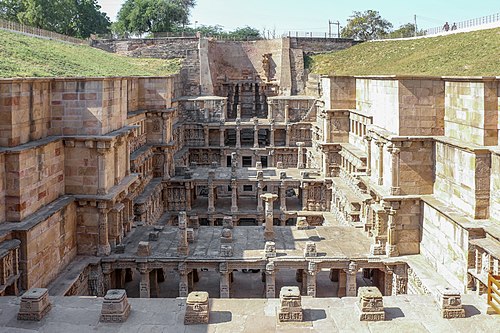
Pātan is a historic city situated in the state of Gujarat, India, approximately 125 kilometers northwest of the city of Ahmedabad. Known for its rich cultural heritage and architectural marvels, Pātan was founded in 745 AD by the Gurjara-Pratiharas and served as the capital of their kingdom for several centuries. The city is most famous for its well-preserved Rani ki Vav, a stepwell that dates back to the 11th century and is a UNESCO World Heritage Site. This intricately designed structure features a series of staircases and beautifully carved sculptures, showcasing the artistry of that era. Pātan was also a significant center for textile production, especially in producing Patola silk sarees, renowned for their vibrant colors and complex patterns, which are made using an elaborate double-ikat technique.
The city is a melting pot of various religious communities, with numerous temples and mosques reflecting its diverse history. The Sahastralinga Lake and the remains of the ancient fort provide a glimpse into Pātan's historical significance. The city's architecture is an amalgamation of various styles, with notable structures such as the Jain temples that stand testament to the prosperity of the Jain community in the region. Pātan also holds cultural importance through its festivals, art forms, and local crafts, which continue to thrive. This ensures that Pātan remains a significant stop for historians, tourists, and those interested in Indian culture, maintaining its relevance as a cultural hub long after its political prominence diminished. Overall, Pātan is an important city that encapsulates centuries of history, artistry, and tradition, making it a unique destination in India.
Facts about Pātan
- Pātan is renowned for its historical significance as the capital of the Gurjara-Pratihara dynasty in the 8th century CE, making it an important center for political and cultural development in ancient India.
- The city is home to the Rani Ki Vav, a UNESCO World Heritage Site, which is a stepwell famous for its intricate architectural design and sculptures, showcasing the artistry of 11th-century India.
- Pātan is known for producing Patola silk sarees, which are highly valued for their vivid colors and intricate patterns, making them a unique textile heritage of the region.
- The city features the Pātan Patola Institute, which is dedicated to preserving and teaching the art of making Patola sarees, reflecting the local craftsmanship and cultural pride.
- Pātan was an important center for Jainism, evident from the numerous Jain temples and inscriptions found in and around the city, particularly from the 12th and 13th centuries.
- The Sahastralinga Talav, an ancient reservoir in Pātan, is notable for its unique construction and engineering, built in the 11th century to provide water and support agricultural activities.
- Pātan celebrates a rich tradition of folk arts, including music and dance, reflecting the vibrant culture of Gujarat, with festivals that showcase local talent.
- The city is also known for its historical monuments like the Siddhraj Jaisinh's Palace and the Khambhalida Caves, which highlight the city's diverse architectural influences.
- Pātan played a significant role in the region's trade, both in ancient and medieval times, serving as an important hub due to its strategic location on trade routes.
- The city is linked to the legend of Meera Bai, a poet-saint known for her devotional songs to Lord Krishna, adding a spiritual and cultural dimension to Pātan's history.