Pátra, Greece
- 168,034 people
- 9 places to visit
- 38.2466, 21.7346
Places to Visit (9)
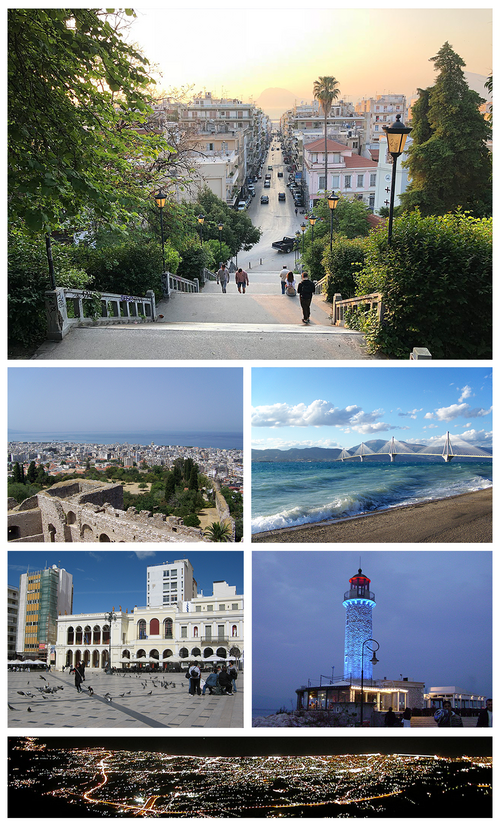
Pátra, located in the northern part of the Peloponnese peninsula in Greece, is the third largest city in the country and serves as the capital of the Achaea regional unit. With a population of approximately 170,000 inhabitants, it is a significant urban center and a vital economic, commercial, and educational hub. Positioned on the Gulf of Patras, the city is known for its vibrant port, which is one of the busiest in Greece and acts as an essential gateway for ferry connections to Italy, making it a crucial point for trade and tourism. The city's origins date back to ancient times; it is believed to have been established in the 3rd millennium BC and has a rich historical tapestry influenced by various civilizations, including the Romans, Byzantines, and Ottomans.
Pátra's cultural scene is lively and diverse, featuring several museums, theaters, and galleries that celebrate both its ancient heritage and modern life. Notably, the Archaeological Museum of Patras showcases artifacts from the Roman and Byzantine eras, while the city's famous Carnival of Patras, celebrated annually before Lent, draws thousands of visitors and is one of the largest and most colorful festivals in Greece. The city's architecture reflects its historical past, highlighted by neoclassical buildings, such as the impressive Patras Railway Station, designed by renowned architect Ernst Ziller, and the 19th-century Church of Saint Andrew, which dominates the skyline. As a university city, Pátra is home to the University of Patras, which contributes to its youthful atmosphere and dynamic economy. The combination of its rich history, maritime significance, and lively cultural events makes Pátra a unique destination in Greece, appealing to both locals and tourists alike.
Facts about Pátra
- Pátra is the third largest city in Greece, following Athens and Thessaloniki.
- The city is known for the Rio-Antirio Bridge, one of the longest cable-stayed bridges in the world, which connects the Peloponnese peninsula to mainland Greece.
- Pátra has a significant historical background as it was an important center in ancient Greece and the birthplace of the famous philosopher and mathematician, Epicurus.
- The city hosts the annual Patras Carnival, the largest and most famous carnival in Greece, attracting thousands of visitors each year.
- Pátra is home to the Roman Odeon, one of the best-preserved ancient theaters in Greece, which dates back to the 1st century AD.
- The city played a crucial role in the Greek War of Independence in the early 19th century, specifically during the siege of the city in 1821.
- It is known for its lively seaside promenade, the 'Paralia', lined with cafes, shops, and bars, making it a popular spot for locals and tourists alike.
- Pátra boasts a vibrant cultural scene, with numerous theaters, galleries, and the University of Patras, which is one of the largest universities in the country.
- The city has a rich architectural heritage, featuring neoclassical buildings, modern structures, and landmarks such as the Saint Andrew’s Cathedral, the largest church in the Peloponnese.
- Pátra is a significant port city, providing access to ferries that connect to various islands, including Zakynthos, Kefalonia, and Ithaca.