Pénjamo, Mexico
- 40,070 people
- 11 places to visit
- 20.4314, -101.7241
Places to Visit (11)
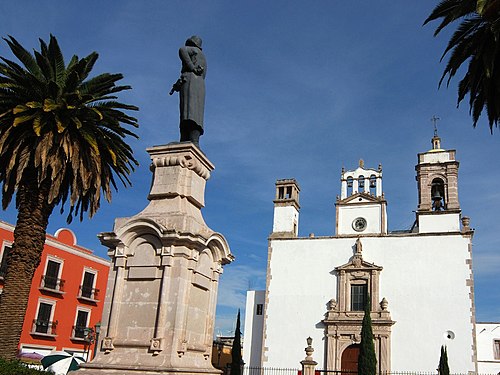
Pénjamo is a municipality and city located in the state of Guanajuato, Mexico. It serves as the municipal seat of Pénjamo Municipality and is situated approximately 150 kilometers northwest of the state capital, León. The city is positioned in a semi-arid region at an elevation of around 1,800 meters, which contributes to its varied climate, characterized by hot summers and mild winters. With a population of nearly 40,000 residents, Pénjamo is known for its rich historical heritage, agricultural production, and cultural significance in the region.
Founded in the late 16th century, Pénjamo has deep historical roots. It was originally established by Spanish settlers and has been shaped significantly by both indigenous and colonial influences. One of the most notable figures associated with Pénjamo is Miguel Hidalgo y Costilla, a key leader of the Mexican War of Independence, who was born in the nearby town of Pénjamo in 1753. The city celebrates its connection to this historical figure with various commemorations and has developed sites of interest, including the parish of San Miguel Arcángel, which showcases baroque architectural elements. Pénjamo’s economy is primarily based on agriculture, with crops such as corn, beans, and sorghum cultivated in the surrounding areas. The region also engages in livestock farming, further supporting local commerce.
Culturally, Pénjamo hosts several annual festivals and events that reflect its traditions and community spirit. The Feria de Pénjamo, held annually in July, features music, dance, and local cuisine, attracting visitors from surrounding areas. Additionally, the city maintains a strong sense of local identity through its traditional crafts, such as pottery and textiles, which are significant to the cultural landscape. Overall, Pénjamo is a city that blends its historical significance with thriving agricultural practices, making it a notable location within the state of Guanajuato and a reflection of Mexico's rich cultural tapestry.
Facts about Pénjamo
- Pénjamo is known as the birthplace of José María Morelos y Pavón, a key leader in the Mexican War of Independence.
- The city is famous for its traditional production of 'cajeta,' a dulce de leche made from goat's milk, which is a local delicacy.
- Pénjamo hosts the annual Festival de la Cajeta, celebrating its rich tradition of sweet-making and attracting visitors from across Mexico.
- The town has a distinctive colonial architecture with notable landmarks like the Templo de San Francisco and the Casa de Morelos.
- Pénjamo is also recognized for its agricultural production, particularly in the cultivation of corn and other essential crops in the region.
- The Pénjamo region is rich in history, featuring archaeological sites from pre-Hispanic cultures predating Spanish colonization.
- Pénjamo has a unique position as a pivotal location in the history of Mexican regional conflicts, serving as a strategic point during various revolutionary movements.
- The city has a vibrant handicraft trade, particularly in pottery and textiles, often showcasing traditional designs and techniques.
- Pénjamo is culturally rich, known for its local music genres, including the traditional 'son' popular in the Guanajuato region.
- The city's official emblem features elements that reflect its history and culture, emphasizing its significance in Mexican heritage.