Peshawar, Pakistan
- 1,218,773 people
- 14 places to visit
- 34.0151, 71.5249
Places to Visit (14)
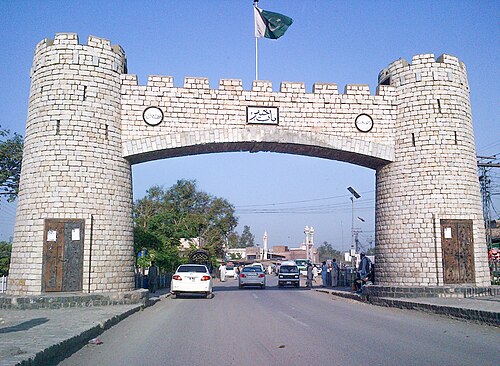
Peshawar, the capital of Khyber Pakhtunkhwa province in Pakistan, is one of the oldest cities in the region, with a history that dates back over 2,000 years. Positioned near the northwestern border of Pakistan, it has served as a historical gateway to the Indian subcontinent and Central Asia. The city lies at an altitude of around 1,200 feet (370 meters) in the field of the Peshawar Valley, surrounded by the picturesque landscape of the Khyber Pass. Peshawar’s rich cultural heritage is evident in its architecture, cuisine, and traditions. Key landmarks include the historic Bala Hisar Fort, the Mahabat Khan Mosque, and the famous Qissa Khwani Bazaar, known for its bustling atmosphere and vibrant commerce.
Peshawar has played a significant role throughout various historical epochs, including the era of the Gandhara civilization, the Greco-Bactrian period, and the influence of the Mughal Empire. The city also witnessed substantial upheaval during the British Raj and later emerged as a strategic location during the Afghan War. Its intricate tapestry of ethnicities comprises Pashtuns, Hindko speakers, and other communities, all contributing to its diverse cultural milieu. In recent years, Peshawar has faced challenges, including security concerns stemming from regional conflicts. Nonetheless, efforts have been made towards revitalization and development, making Peshawar a city of resilience. Today, it remains an important economic hub, known for its trade in goods ranging from textiles to agriculture, while also striving to preserve its historical identity amidst modernization and change.
Facts about Peshawar
- Peshawar is one of the oldest cities in Asia, with a history that dates back over 2,000 years, making it a significant center for various cultures and empires.
- The city is renowned for the historic Bala Hisar Fort, which has been a strategic military site for various rulers, showcasing its long military history.
- Peshawar serves as the gateway to the Khyber Pass, a crucial trade route that has been historically significant for trade between the Indian subcontinent and Central Asia.
- It boasts the famous Peshawari Chappal, a traditional handmade leather sandal that is not only a fashion statement but also reflects the region's craftsmanship.
- The Peshawar Museum is home to an extensive collection of Gandharan art and artifacts, highlighting its rich cultural heritage linked to Greek and Buddhist influences.
- Peshawar has a vibrant bazaar culture, particularly in the historic Qissa Khwani Bazaar, known for its traditional storytelling and rich history of trade.
- The city has hosted various significant events, including the Afghan Refugee Crisis of the 1980s, which shaped its demography and local culture.
- Peshawar is a significant center for Pashto literature and poetry, often regarded as the birthplace of many renowned poets, including the famous revolutionary poet Ghani Khan.
- It is home to the Peshawar University, one of the oldest universities in Pakistan, established in 1950, and has produced many prominent scholars and leaders.
- Peshawar is recognized for its unique cuisine, especially dishes like Kabuli Pulao and Chapli Kebabs, which highlight the region's culinary heritage.