Pingdu, China
- 542,234 people
- 3 places to visit
- 36.7867, 119.9599
Places to Visit (3)
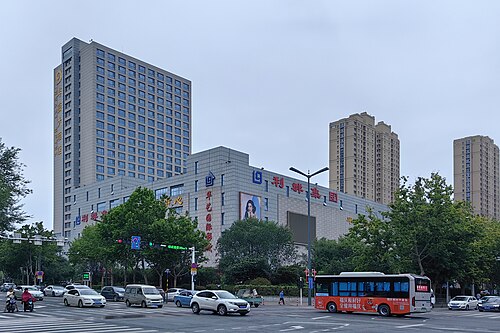
Pingdu is a county-level city located in the Shandong province of China, situated approximately 90 kilometers southeast of the provincial capital, Jinan. It is part of the Qingdao metropolitan area, making it strategically significant due to its proximity to the coastal city known for its economic activities and development. Pingdu covers an area of around 3,184 square kilometers and, as of the latest census, has a population exceeding 800,000 residents. The city is characterized by a mix of urban and rural landscapes, with agriculture playing a vital role in its economy. The local government prioritizes agriculture, cotton, and fruit production, leveraging the rich soil and favorable climate of the region.
Pingdu has a rich historical background, dating back to ancient times, and has evolved significantly in recent decades, particularly with the advent of industrialization. The city has a developing infrastructure, with improvements in transportation, education, and healthcare services contributing to its growth. Economic activities in Pingdu are diverse, including agriculture, manufacturing, and commerce. The establishment of various industrial parks attracts investment and boosts local employment opportunities. Cultural festivals and local traditions are an integral part of life in Pingdu, with events reflecting the city's heritage attracting both residents and visitors. The combination of its agricultural backbone and growing industrial sector positions Pingdu as a noteworthy city within Shandong province, contributing to regional development while preserving its cultural identity.
Facts about Pingdu
- Pingdu is known for its unique geographical location in the Shandong province, situated near the east coast of China, providing it with a mild climate and fertile land.
- The city has a rich agricultural heritage and is often referred to as the 'Hometown of Grains,' producing significant amounts of wheat, corn, and peanuts.
- Pingdu is home to the famous Luoyang Bridge, also known as the 'Pingdu Bridge,' which has historical significance and showcases ancient Chinese architectural techniques.
- The region has a long history dating back over 2,000 years, with archaeological sites revealing remnants of the Western Han Dynasty.
- Pingdu hosts the annual Pingdu International Wheat Festival, attracting agricultural professionals and tourists to celebrate its wheat production.
- The city's economy has diversified over the years, becoming a hub for both traditional agriculture and modern industries such as manufacturing and textiles.
- Pingdu is known for its cultural heritage, with notable traditional crafts such as embroidery and pottery being practiced by local artisans.
- The Pingdu Dazeshan Mountain offers stunning natural scenery and is a popular destination for hiking and outdoor activities, distinguishing it from other industrial cities.
- Pingdu has developed a reputation for its educational institutions, with an increasing focus on science and technology to promote local development.
- The city has made significant advancements in infrastructure, including modern transportation systems that connect it efficiently to larger urban centers in Shandong province.