Pirna, Germany
- 40,322 people
- 10 places to visit
- 50.9625, 13.9419
Places to Visit (10)
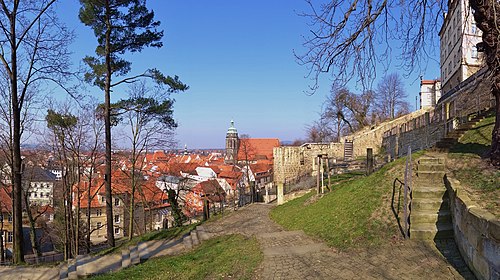
Pirna is a historic town located in the state of Saxony, Germany, positioned on the banks of the Elbe River, about 20 kilometers southeast of Dresden. Known for its well-preserved medieval architecture and scenic surroundings, Pirna serves as a gateway to the picturesque Saxon Switzerland National Park. The town has a rich history dating back over a thousand years, with its first recorded mention in a document from 1233. During the Middle Ages, Pirna thrived as a significant trade center due to its strategic location on key trade routes. The town played a prominent role in the development of the region, particularly during the period of the Holy Roman Empire.
The architectural landscape of Pirna is characterized by a blend of styles that reflect its historical significance. The town center is dominated by the stunning St. Mary’s Church (Marienkirche), a fine example of Gothic architecture built in the late 14th century. Another notable structure is the Renaissance-style town hall, which dates back to the 16th century. The Altstadt, or Old Town, features numerous half-timbered houses, cobblestone streets, and quaint squares that attract visitors seeking to experience its charming ambiance. Additionally, the nearby Sonnenstein fortress, which dates back to the 13th century, offers panoramic views of the Elbe River and the surrounding landscape.
Pirna is also known for its cultural events and local traditions, including the annual Pirnaer Stadtfest, which celebrates the town's heritage with music, food, and activities that engage both residents and tourists alike. The town is well-connected by public transportation, making it an excellent base for exploring nearby natural attractions, including hiking trails and rock formations in the Saxon Switzerland region. With its blend of historical significance and natural beauty, Pirna continues to be a captivating destination for those interested in German culture and history.
Facts about Pirna
- Pirna is known as the 'Gateway to Saxon Switzerland' due to its proximity to the breathtaking Saxon Switzerland National Park.
- The city features a well-preserved medieval old town with a distinctive Baroque architecture, including the notable St. Mary's Church (St. Marienkirche).
- Pirna had an essential role during the Thirty Years' War and is home to the historic Pillnitz Palace and Park, where Czech kings resided.
- The city is famous for its traditional 'Pirnaer Rähmchen', a regional pastry, which showcases the town's culinary traditions.
- Pirna is the birthplace of the famous painter Caspar David Friedrich, a key figure in the Romantic movement, who drew inspiration from the surrounding landscapes.
- The town hosts the annual 'Pirnaer Altstadtfest', a vibrant festival celebrating the city’s culture, history, and heritage.
- Pirna was an important center for the Saxon porcelain industry and housed several porcelain factories in the 18th and 19th centuries.
- The city is traversed by the Elbe River, featuring scenic riverbanks that attract outdoor enthusiasts and nature lovers.
- Pirna's historical significance is marked by the Renaissance-style Town Hall, a focal point of the city’s civic life.
- In 1875, the first local railway line from Pirna to Dresden was established, enhancing the city’s connectivity and economic growth.