Podgorica, Montenegro
- 236,852 people
- 17 places to visit
- 42.4304, 19.2594
Places to Visit (17)
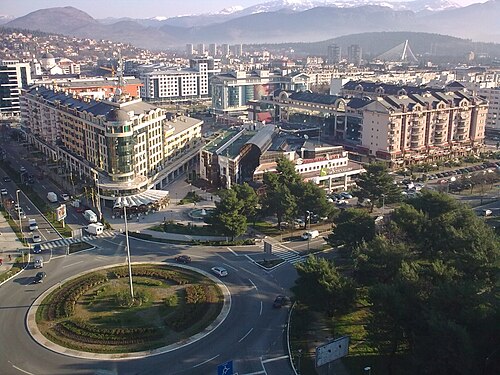
Podgorica, the capital and largest city of Montenegro, serves as the political, cultural, and economic center of the country. Situated in the central part of Montenegro, it lies at the confluence of the Ribnica and Morača rivers, surrounded by mountain ranges that give it a picturesque backdrop. With a population of around 200,000, Podgorica is characterized by its diverse architecture that merges modern developments with remnants of its historical past. The city has undergone significant transformations since it was first recorded as a settlement in the 10th century, serving various roles through different historical epochs, including the Ottoman period and the Yugoslav era.
The economy of Podgorica is primarily driven by services, industry, and trade, with an increasing emphasis on tourism, particularly as Montenegro has gained recognition as a scenic travel destination. The city is home to several universities, contributing to a relatively young and educated population. Cultural attractions in Podgorica include the Millennium Bridge, an iconic structure that symbolizes the city's modern era, and the historic Ribnica Fortress, which highlights the area's rich heritage. Additionally, a vibrant café culture and a lively arts scene characterize the city's social life. As Montenegro continues to develop its infrastructure and economy, Podgorica stands at the forefront, balancing the preservation of its cultural identity with modernization and growth.
Facts about Podgorica
- Podgorica is the administrative and political capital of Montenegro, making it a central hub for government and decision-making.
- The city is home to the unique Millennium Bridge, a cable-stayed bridge that symbolizes Montenegrin modern architecture and connects different parts of the city.
- Podgorica has a blend of architectural styles, including Ottoman, socialist, and modern influences, reflecting its diverse history.
- It is one of the few capitals in Europe without any major historical monuments or castles, which makes its charm lie in its modern urban environment.
- Podgorica hosts the annual Pg Present festival, a cultural event that showcases the city's creativity through music, art, and literature.
- The city is located at the confluence of the Moraca and Ribnica rivers, adding natural beauty to its landscape and offering riverside parks for recreation.
- Podgorica is served by the Podgorica Airport, which is the busiest airport in Montenegro, facilitating international travel and tourism.
- The city has a significant student population, with the University of Montenegro being the largest educational institution in the country.
- Podgorica is known for its vibrant cafe culture, where locals and tourists gather in numerous cafes and restaurants to socialize and enjoy local cuisine.
- Unlike most Montenegrin towns, which are often coastal or mountainous, Podgorica is situated in a flat valley, making it distinct in terms of geography.