Pompei, Italy
- 23,902 people
- 16 places to visit
- 40.7496, 14.5053
Places to Visit (16)
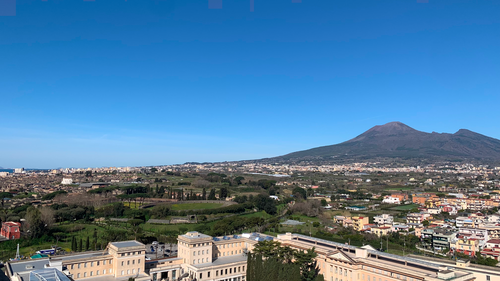
Pompei, an ancient city located near the modern town of the same name in Italy's Campania region, is renowned for its remarkably preserved ruins that provide a window into Roman life. Established in the 7th century BC, Pompei became a thriving commercial hub, benefitting from its fertile volcanic soil and strategic location near the Bay of Naples. The city flourished during the Roman Republic and Empire, boasting numerous temples, public baths, theaters, and intricate frescoes, which highlight the sophisticated artistry and culture of the time. Pompei reached its peak in the 1st century AD, with a population estimated to be around 20,000 inhabitants.
The cataclysmic eruption of Mount Vesuvius in AD 79 brought an abrupt end to this vibrant city. The volcanic ash and pumice it ejected buried Pompei under approximately 4 to 6 meters of material, preserving buildings, artifacts, and even the remains of the inhabitants. Rediscovered in the 18th century, extensive archaeological excavations began, revealing an incredible amount of details about daily life in the ancient world, such as residential areas, food, and even social norms. The site has become one of the most significant archaeological sites globally, attracting millions of tourists each year and providing critical insights into Roman urban planning and lifestyle.
Today, Pompei is a UNESCO World Heritage Site and remains an important source of historical, cultural, and geological knowledge. Visitors can explore the well-preserved structures, including the Forum, the amphitheater, and the famous Villa of the Mysteries, which features elaborate frescoes that continue to enchant historians and art lovers alike. The site also serves as a poignant reminder of nature's power and the fragility of civilization, making it a point of interest for both educational and touristic purposes. Pompei stands as a testament to human resilience and the enduring legacy of the ancient world, reflecting the complexities of life before its sudden cessation.
Facts about Pompei
- Pompeii was a thriving Roman city until it was destroyed and buried under volcanic ash from the eruption of Mount Vesuvius in 79 AD.
- The city remained largely undiscovered for nearly 1,700 years, until its rediscovery in 1748, providing invaluable insights into Roman life.
- Pompeii is home to some of the best-preserved classical ruins in the world, including frescoes, mosaics, and entire buildings like the amphitheater and the Forum.
- The plaster casts of the victims, created by filling voids left by decomposing bodies in the ash, provide poignant insights into the tragic event and its human impact.
- Pompeii had an advanced infrastructure for its time, including a complex system of aqueducts, streets, and public baths, setting it apart from more rural settlements.
- The Villa of the Mysteries, located outside the city walls, contains stunning frescoes that are thought to relate to secret religious cults, marking a unique aspect of Pompeian culture.
- Pompeii features the only known example of a Roman fast-food establishment (thermopolia) with preserved counters, highlighting the city’s vibrant street food culture.
- The city was also notable for its large, well-preserved graffiti, which provides insight into the social and political life of its citizens.
- Pompeii covers an area of about 66 hectares (163 acres), making it one of the largest archaeological sites in the world dedicated to an ancient city.
- In 1997, UNESCO designated Pompeii as a World Heritage Site, recognizing its cultural significance and the importance of its preservation.