Ponta Delgada, Portugal
- 20,056 people
- 11 places to visit
- 37.7394, -25.6687
Places to Visit (11)
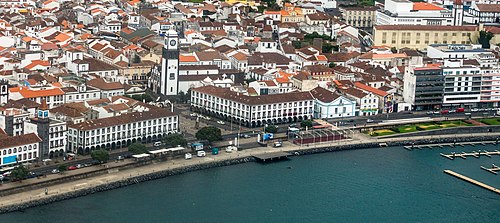
Ponta Delgada is the largest city and administrative capital of the Azores archipelago, which is an autonomous region of Portugal located in the North Atlantic Ocean. Founded in the 15th century, Ponta Delgada has grown significantly from its early days as a small fishing village. The city is situated on the southern coast of São Miguel, the largest island in the archipelago, and it serves as a major hub for commerce, tourism, and transportation within the region. The city’s rich history is reflected in its architecture, with notable structures such as the Saint Christopher Church and the Portas da Cidade, a beautiful neoclassical city gate built in the 18th century.
Ponta Delgada thrives naturally and culturally, surrounded by stunning volcanic landscapes, lush vegetation, and picturesque coastlines. The city's natural beauty makes it a popular destination for eco-tourism, outdoor activities, and marine exploration. Visitors can enjoy whale watching, hiking, and visiting hot springs, such as those found in Furnas. Additionally, Ponta Delgada has a vibrant cultural scene, characterized by various festivals, art exhibitions, and traditional gastronomy that features local ingredients and flavors. The local cuisine often includes fresh seafood, dairy products, and unique dishes such as "cozido," cooked in the heat of volcanic soil. With its combination of historical significance, natural beauty, and cultural richness, Ponta Delgada stands out as a unique destination in Portugal and an essential part of the Azorean identity.
Facts about Ponta Delgada
- Ponta Delgada is the largest city and the administrative center of the Azores archipelago, which is unique to Portugal, located in the Atlantic Ocean.
- The city boasts a mix of architectural styles, including 18th-century Manueline, Moorish, and modern constructions, making it distinct from mainland Portuguese cities.
- Ponta Delgada is home to the only botanical garden in the Azores, the Jardim António Borges, which features a diverse array of endemic plants and exotic species.
- The historical city gate, Portas da Cidade, is a symbol of Ponta Delgada and was originally constructed in the 18th century; it is a notable landmark with unique neoclassical influences.
- The city has a rich whaling history, evident in the Whaling History Museum, which showcases Ponta Delgada's maritime past and significance in the whaling industry during the 19th century.
- Ponta Delgada hosts the Festa do Senhor Santo Cristo dos Milagres, one of the most important religious festivals in the Azores, attracting thousands of visitors every May.
- The city's marina is one of the largest in the Azores, offering stunning views of the Atlantic and serving as an important hub for yachting and fishing activities.
- The nearby Lagoa das Sete Cidades, a twin lake situated in a volcanic crater, is one of the Azores' most picturesque natural attractions, easily accessible from Ponta Delgada.
- Ponta Delgada has a vibrant arts scene, with numerous galleries and cultural events, including the annual Festas da São João, celebrating local music and heritage.
- The city is a gateway to various adventure activities, including hiking, whale watching, and diving, taking advantage of the unique volcanic landscape and rich biodiversity.